Do Fish Sleep? How Fish Rest and Survive Underwater
AIMAN
July 28, 2026
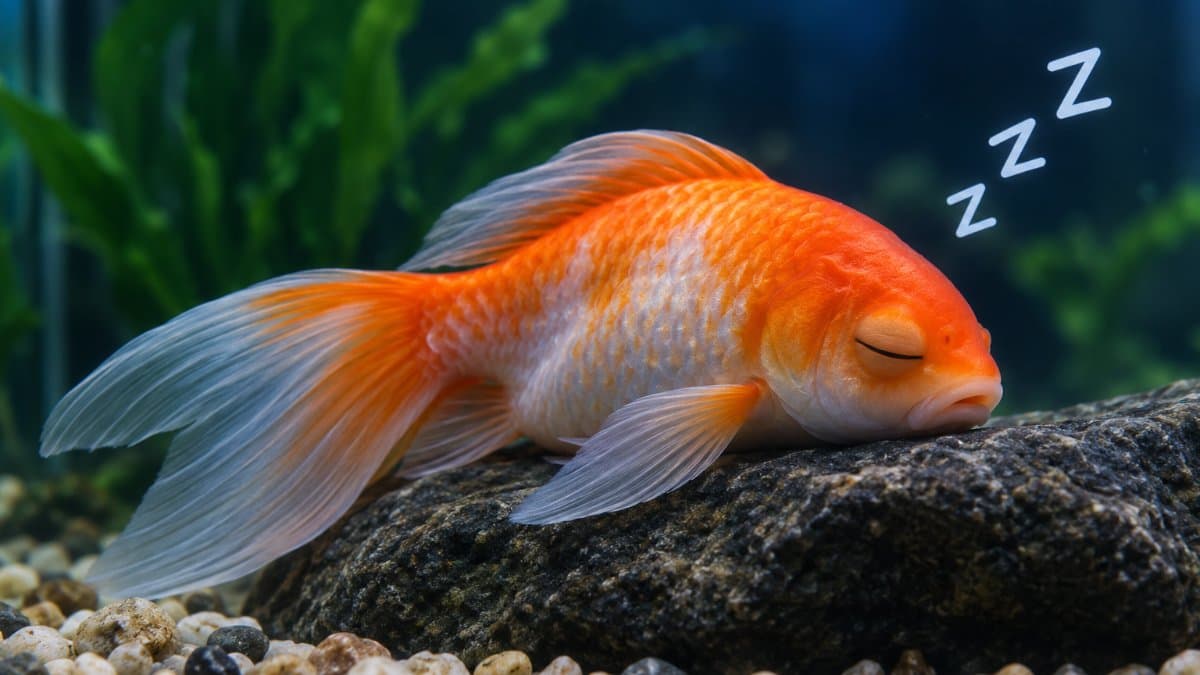
Do Fish Sleep? How Fish Rest and Survive Underwater
Yes, fish sleep — but not the way humans do. Instead of closing their eyes (most species have no eyelids), they enter a rest state marked by slowed breathing, reduced movement, and lower response to their surroundings, often at a set time each day tied to their internal circadian clock.
If you've ever watched your goldfish hover motionless in the corner of the tank and wondered if something was wrong, you're not alone. It looks nothing like the sleep we're used to. There's no closed eyes, no obvious "bedtime," and no snoring. But underneath that stillness, something very real is happening.
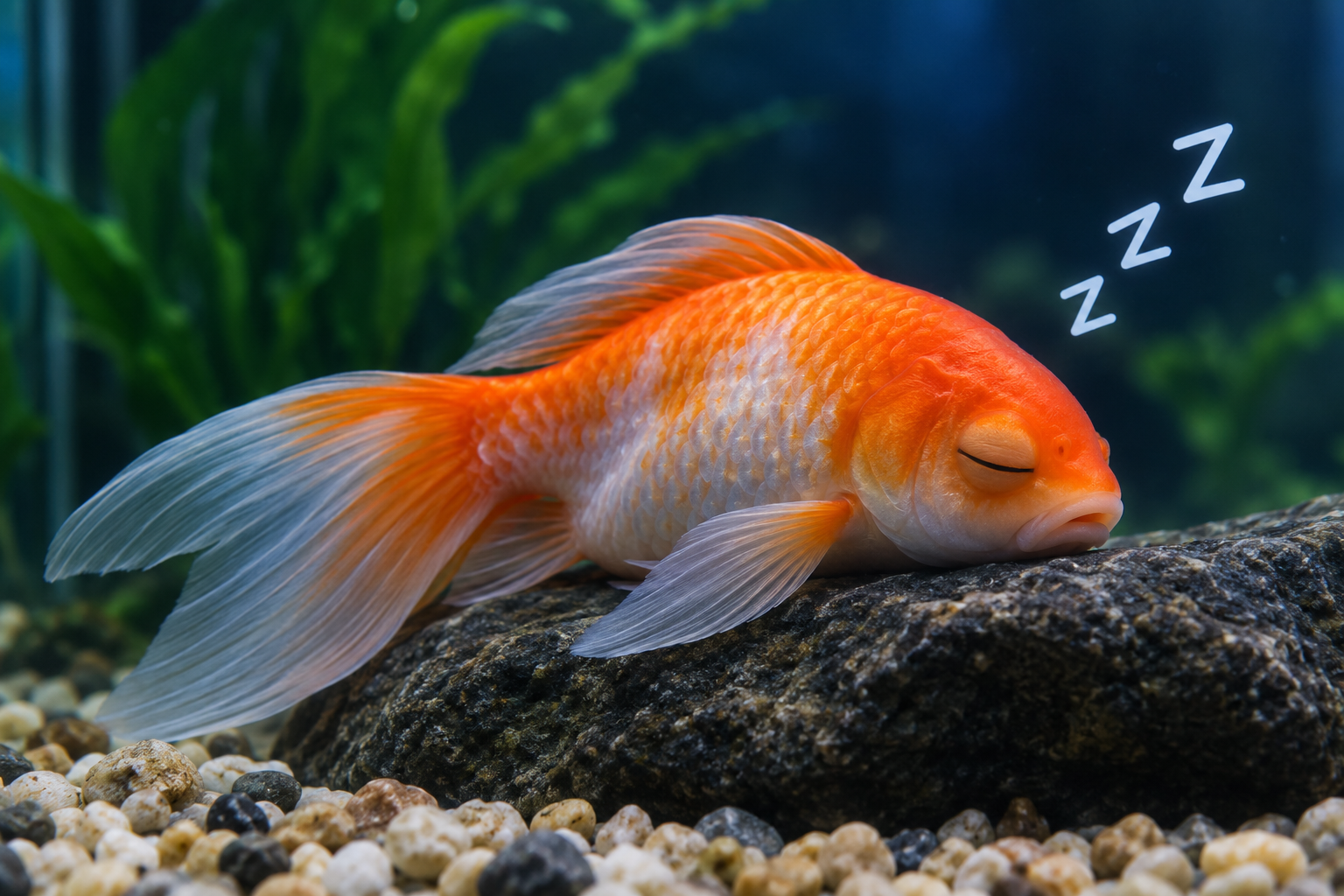
Fish do sleep. They just do it on their own terms, shaped by millions of years of evolution in an environment where staying alert to predators — even while resting — can mean the difference between survival and becoming someone else's dinner.
This guide breaks down what fish sleep actually looks like, why it works so differently from ours, and how it varies across species like bettas, goldfish, and sharks.
What Is Fish Sleep?
Fish sleep is best described as a rest state rather than sleep in the strict mammalian sense. Researchers define it by a set of measurable changes rather than one single trait:
A drop in metabolic rate and oxygen consumption
Reduced or motionless swimming
Slower gill movement and breathing
A higher threshold for waking up — they become harder to startle
A consistent daily pattern, usually tied to light and darkness
Scientists studying zebrafish, a common lab species, have recorded brain activity during these rest periods and found patterns that look different from full wakefulness, though they're still debating how closely this maps onto the REM and non-REM cycles seen in mammals. What's clear is that they need this downtime. Deprive a zebrafish of its rest period in lab conditions, and it will "catch up" on rest afterward — a strong sign that this isn't just idle floating, but a biological need.
Unlike humans, they don't have a brain structure exactly like our neocortex, so their version of sleep evolved along a different path. That's part of why it can be hard to recognize at first glance — it simply doesn't look like anything we associate with sleeping.
How Do Fish Sleep?
There's no single way fish rest — it depends heavily on species, habitat, and body shape. Broadly, though, most species fall into one of a few patterns:
Staying still in open water, sometimes drifting slightly with the current
Resting on the substrate, tucked against rocks, sand, or plants
Wedging into crevices, a favorite trick of reef dwellers trying to avoid becoming a midnight snack
Reducing but not stopping movement, especially in species that must keep swimming to breathe
Some species take resting to unusual extremes. Certain parrotfish secrete a mucus "sleeping bag" around themselves at night, which may mask their scent from predators. Other reef species change color while resting, going pale or blotchy compared to their daytime look.
The common thread is that this rest is real, physiologically meaningful, and necessary — it just doesn't look like a bedtime routine.
Do Fish Sleep at Night?
For most species, yes — but not all of them. They generally fall into two camps:
Diurnal fish are active during the day and rest at night. Most common aquarium and reef species, including goldfish and many tropical species, fit this pattern.
Nocturnal fish flip the script, resting during the day and becoming active after dark. Catfish and certain eels are well-known examples.
What drives this timing is largely the same system that regulates our own sleep: a circadian rhythm influenced by light exposure and controlled in part by melatonin. They produce melatonin in response to darkness, and it plays a role in signaling when it's time to slow down. This is why aquarium lighting matters so much — a tank with lights left on 24/7 can throw off their internal clock and lead to stress or erratic rest patterns, much like a person struggling to sleep in a room that never gets dark.
Signs Your Fish Is Sleeping
Because fish don't close their eyes, telling rest apart from illness can be tricky for new owners. Look for this combination of signs rather than any single one:
Staying still for extended stretches, often in the same spot each day
Slower, more regular gill movement
Fading or dulling of color compared to its normal daytime look
Hovering near the bottom, tucked into decor, or resting against a leaf
Reduced reaction to mild movement nearby, though it should still respond to a light tap or sudden change
If it's lying on its side gasping, refusing to move even with gentle stimulation, or showing this behavior at unusual times combined with other symptoms like clamped fins or loss of appetite, that points toward illness rather than rest — worth a closer look rather than an assumption that it's just sleeping.
Species-Specific Sleep
Betta Fish Sleep
Bettas are known for resting near the surface, often tucked against a broad leaf or floating plant, and sometimes lying on their side — a position that alarms new owners the first time they see it. As long as the betta responds to light tapping on the glass or food being added, this is normal rest behavior, not illness. Bettas generally need close to 8–10 hours of uninterrupted darkness to maintain a healthy rest cycle.
Goldfish Sleep
Goldfish tend to rest near the bottom of the tank or tucked against decorations, usually staying upright rather than lying on their side. Their gill movement slows noticeably, and they become far less responsive to activity around the tank. Like bettas, they benefit from a consistent light-dark cycle rather than constant lighting.
Shark Sleep
Sharks complicate the picture because breathing and resting aren't always separable. Many species, like the great white, are obligate ram ventilators — they must keep swimming to force water over their gills, so they can't stop moving entirely to rest. Instead, researchers believe they enter periods of reduced brain activity while continuing to swim, essentially resting "on autopilot."
Other species, like nurse sharks, can actively pump water over their gills without swimming, which frees them up to lie motionless on the seafloor for extended periods — a much closer match to what we'd recognize as sleep.
Do Fish Have Eyelids?
Most fish don't have true eyelids, which is exactly why they appear to sleep with their eyes open. Their eyes are constantly bathed in water, so they don't face the same risk of drying out that land animals do — removing much of the evolutionary pressure to develop eyelids in the first place.
There's a notable exception: some sharks have a nictitating membrane, a translucent protective layer that can sweep across the eye, mainly used to shield it during feeding rather than for sleep. A few other species have a simpler fixed membrane that offers basic protection but still doesn't close the way a human eyelid does.
Can Fish Dream?
This one is still an open question in fish biology. Studies on zebrafish have found brain activity patterns during rest periods that share some similarities with the states linked to dreaming in mammals, but scientists are cautious about drawing a direct comparison. Their brains are structured differently enough from ours that "dreaming" in the human sense may not be the right framework at all. For now, the honest answer is: possibly, but it's not confirmed.
Should You Turn Off Aquarium Lights at Night?
Yes — most aquarium species benefit from a consistent 8–12 hour dark period, mirroring natural day-night cycles. A few practical tips:
Use a timer so lighting stays consistent even if you forget
Avoid placing the tank somewhere exposed to bright ambient light overnight, like near a streetlamp-facing window
Dim lighting gradually rather than switching abruptly from bright to pitch dark, which can startle them
Keep the schedule consistent — irregular lighting is more disruptive than simply having "less than ideal" hours
A stable light cycle supports healthier rest patterns, which in turn supports immune function, coloration, and overall stress levels in most species.
FAQs
Do fish sleep? Yes. They enter a rest state with slowed breathing, reduced movement, and lower responsiveness, even though most don't close their eyes to do it.
How do fish sleep without closing their eyes? Most lack eyelids because their eyes stay moist in water, so there's no need to close them. Rest is instead marked by stillness and reduced activity rather than closed eyes.
Do fish sleep at night? Most species do, especially diurnal ones like goldfish. Some species, like certain catfish, are nocturnal and rest during the day instead.
Can fish sleep with their eyes open? Yes — since the vast majority of fish have no eyelids, resting with eyes open is the norm rather than the exception.
Do fish dream? It's unconfirmed. Some brain-activity studies in zebrafish hint at dream-like states, but researchers haven't established a direct equivalent to human dreaming.
Do sharks sleep? In a modified way. Species that must keep swimming to breathe rest with reduced alertness while still moving, while species that can pump water without swimming can lie fully still.
How can I tell if my fish is sleeping? Look for stillness, slower gill movement, dulled color, and reduced (but not absent) response to activity nearby, usually at a consistent time each day.
Should aquarium lights stay on overnight? No — a consistent dark period of roughly 8–12 hours supports healthier rest cycles and reduces stress for most aquarium species.
The Bottom Line
Fish sleep looks nothing like ours, but it serves the same basic purpose: recovery, regulated by an internal clock, and necessary for health. Whether it's a betta drifting near a leaf, a goldfish tucked by the gravel, or a shark cruising on autopilot, that stillness is doing real biological work — even without a single closed eyelid in sight.
Read more ... Do fish see water