Can Fish See Water? What Their Eyes Actually Do
AIMAN
July 25, 2026
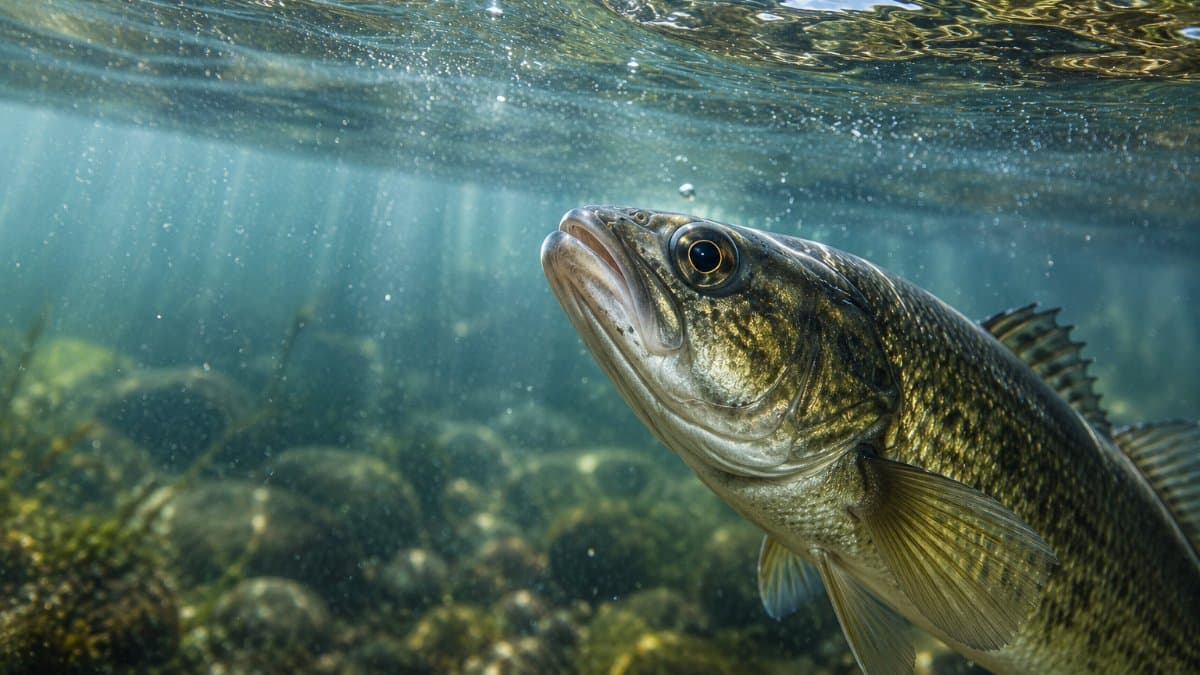
Can Fish See Water? What Their Eyes Actually Do (And Why You Need Glasses to See Them Back)
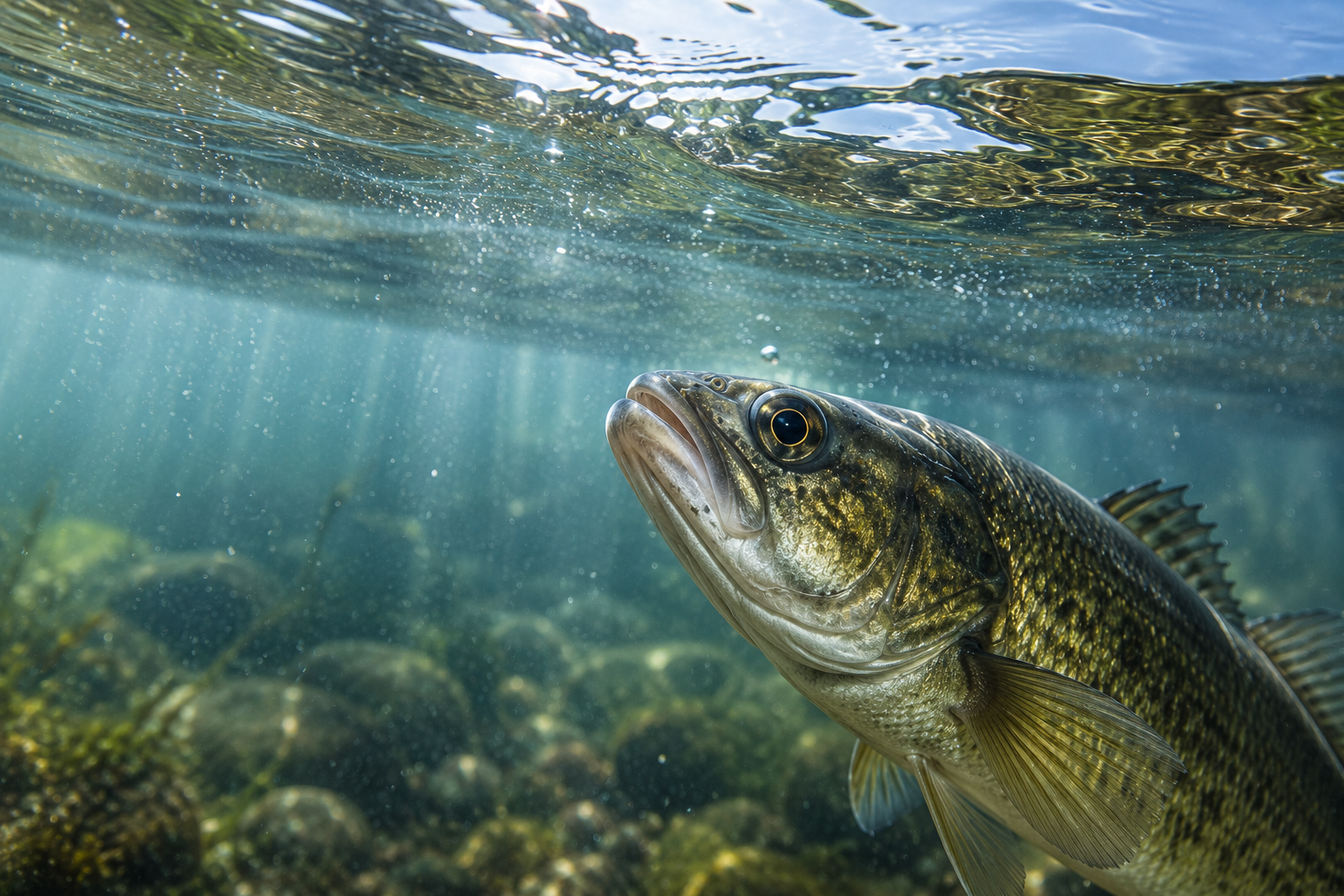
I used to watch my grandfather's koi pond for hours as a kid, convinced the fish somehow knew the water was there, the way I knew the pond itself was there. It took years — and a fair bit of reading on comparative eye anatomy — before I realized I'd had the question backwards the whole time.
Short answer: No, a fish can't see water as a distinct object, not in any meaningful sense. It looks through water, not at it. Light, motion, color, the outline of a predator gliding past — that's what registers. The water itself is just the medium carrying that information to the eye. Asking whether a fish can see water is a bit like asking whether you can see the air you're standing in right now.
Once that idea settles in, the rest of the question — including the flip side, whether we can see fish clearly through water — gets much easier to answer.
Why the Question Feels So Slippery
Part of the confusion comes from how human vision works. We see solid things because light bounces off them and lands in our eyes. Something transparent doesn't behave that way — it lets light pass through more or less untouched, so there's nothing for the eye to grab onto and register as "a thing." Air does this to us. The same thing happens with water and fish. Their eyes aren't built to notice the liquid surrounding them; they're built to catch everything happening inside it. The surrounding medium is scenery, not subject matter.
What's Actually Going On Inside That Eye
The anatomy turns out to be genuinely clever, and the differences from our own eyes explain most of what's happening.
Take the lens shape first. Ours is flattened; theirs is almost perfectly round, because light bends differently crossing from a liquid into an eyeball than it does moving from air into one. A rounder lens focuses better underwater.
Then there's the lack of blinking. Most species have no eyelids at all — being constantly bathed keeps the eye surface clean without any extra effort.
Field of view matters too. With eyes on either side of the head, many species see almost all the way around themselves, save for a narrow blind spot directly behind. Useful when something's constantly trying to eat you.
Color perception depends heavily on habitat. Fish near the surface or in shallow lakes often pick up a wide range of hues, sometimes into ultraviolet — invisible to us entirely. Deeper down, color falls away fast: red light is absorbed first, then orange, then yellow, leaving mostly blue-green tones or, past a certain depth, near-total darkness.
What Registers When a Fish "Looks Around"
Mostly: light filtering from above, shifting with cloud cover or time of day; movement, whether prey scattering or a predator approaching; contrast between colors and depths; and the outlines of nearby objects. Murky water doesn't make anything more visible — it just makes everything harder to make out, the same way fog doesn't become visible itself, it just obscures what's behind it.
If We Can See Water, Can Fish See Air?
A lot of people land on this question from the opposite angle: if a fish poked its head above the surface, would air look as strange to it as this environment might look to us?
Nobody can climb inside another creature's head and know for certain. But the optics aren't kind to a fish trying to see above the surface. That rounded lens, so useful below, becomes a liability up top, because light refracts differently in air. Focus breaks down, and whatever image forms is likely soft and distorted. In that sense, can fish see water or air clearly — the honest answer for both directions is "not the way we'd assume." Neither medium presents itself as a visible object; both are simply what's being seen through.
Vision After Being Pulled Out
Getting hauled onto a dock doesn't switch eyesight off immediately, but trouble starts fast. The lens stays tuned for a medium that's no longer there, so focus suffers right away, and without a constant film of moisture the eye surface can dry out quickly. Mudskippers are a notable exception — they spend large stretches of the day on mudflats, and their eyes have adapted for decent focus both above and below the surface. Most species aren't so lucky.
Not Every Species Sees the Same World
With roughly 34,000 known species, eyesight varies enormously. A goldfish in a shallow tank picks up a broad range of color and reacts quickly to motion. A grouper on a reef relies on sharp contrast for ambush hunting. An anglerfish in the deep ocean barely bothers with color, leaning on extreme sensitivity to faint light instead. Salmon adjust their vision somewhat as they migrate between river and ocean lighting. The common thread is light — each species evolved eyes suited to wherever it spends its time.
Why You Need Glasses to Actually See Fish Underwater
Here's the flip side of everything above: even though a fish doesn't perceive water as an object, you run into a real optical problem trying to see fish through it — and that problem is glare, not the water itself.
When sunlight hits a water surface, some of it reflects straight back at your eyes instead of passing through. That reflected glare is what makes a pond or river look like a sheet of glass rather than something you can see into. This is exactly why fishing glasses to see through water exist: polarized lenses contain a filter that blocks horizontally-oriented light waves — the specific angle that surface glare travels at — while letting the rest of the light through.
How polarization actually works: Ordinary sunglasses just dim everything evenly. Polarized lenses selectively cut the glare vector, which is why a good pair of glasses to see fish in water can turn a blinding, mirror-like surface into something you can actually see beneath, revealing structure, movement, and fish that were invisible a second before.
Choosing a lens tint for conditions: Lens color isn't cosmetic — it changes what you can pick out.
Amber or copper lenses boost contrast in shallow, sunny freshwater — good for spotting fish against rocks or sand.
Grey lenses cut brightness without shifting color, better for open, bright saltwater flats.
Yellow lenses work best in low light or overcast conditions, brightening the scene at some cost to true color.
A decent pair of fishing glasses to see fish in water doesn't change anything about fish vision — it solves a purely human problem, using the same refraction and reflection principles already at play everywhere else in this article.
Why Any of This Actually Matters
For anglers, the vision side of the equation (not the glasses) still matters too: movement and silhouette usually beat exact color matching once conditions turn murky or light gets low. A lure that moves convincingly will often outperform one that's merely the "right" shade — and polarized lenses simply help you judge that movement and depth more accurately from above the surface.
For aquarium keepers, it explains why sudden hand movements or tapping the glass startle fish more than slow ones, even though they can't visually register the glass as a barrier the way we might assume. Their wide field of view and motion sensitivity pick up the gesture long before anything else would.
FAQ
Can fish see water?
Not as a separate object. What registers is light, motion, color, and shape happening within it; the water itself is the medium, not the subject.
Do fish see water differently than we see air?
Functionally, they're in a similar position — neither medium presents itself as a visible object to the creature moving through it.
If we can see water, can fish see air?
Not clearly. A fish's rounded lens is shaped for underwater focus, so light refracts poorly once it hits air, producing a blurry image.
Can fish see water or air more clearly?
Neither is "seen" as an object in either case; each fish's eye is simply optimized for whichever medium it spends most of its life in.
Can a fish see out of water at all?
Briefly, and usually not well — the same lens shape that works underwater doesn't translate above the surface.
Do fishing glasses actually help you see fish in water?
Yes. Polarized lenses filter out horizontal glare reflecting off the surface, which is what normally blocks your view into the water rather than any property of the fish's own vision.
What's the best tint for fishing glasses to see through water?
It depends on conditions: amber/copper for shallow, sunny freshwater; grey for bright saltwater flats; yellow for overcast or low light.
Do fish know they're in water?
There's no evidence they hold an abstract concept of it. They respond to its physical properties — pressure, current, dissolved oxygen — through dedicated senses, which is different from visually recognizing it as "a thing."
A Few Things Worth Remembering
Water isn't perceived as a visible object by fish, much like air isn't by us.
Fish vision is built to register light, motion, shape, and color through the medium, not the medium itself.
Eyesight varies enormously by species, largely tracking depth and sunlight exposure.
The glare problem humans face looking into water is a separate optical issue, solved with polarized fishing glasses — not a fish-vision issue at all.
Mudskippers remain the rare species with decent vision in both air and water.
If you're heading out on the water soon, the biggest single upgrade for actually spotting fish is usually a properly polarized lens matched to your typical conditions — not a better cast.