Wildlife & the Carbon Cycle: Nature's Climate Comebac
Awais Rasool
April 9, 2026
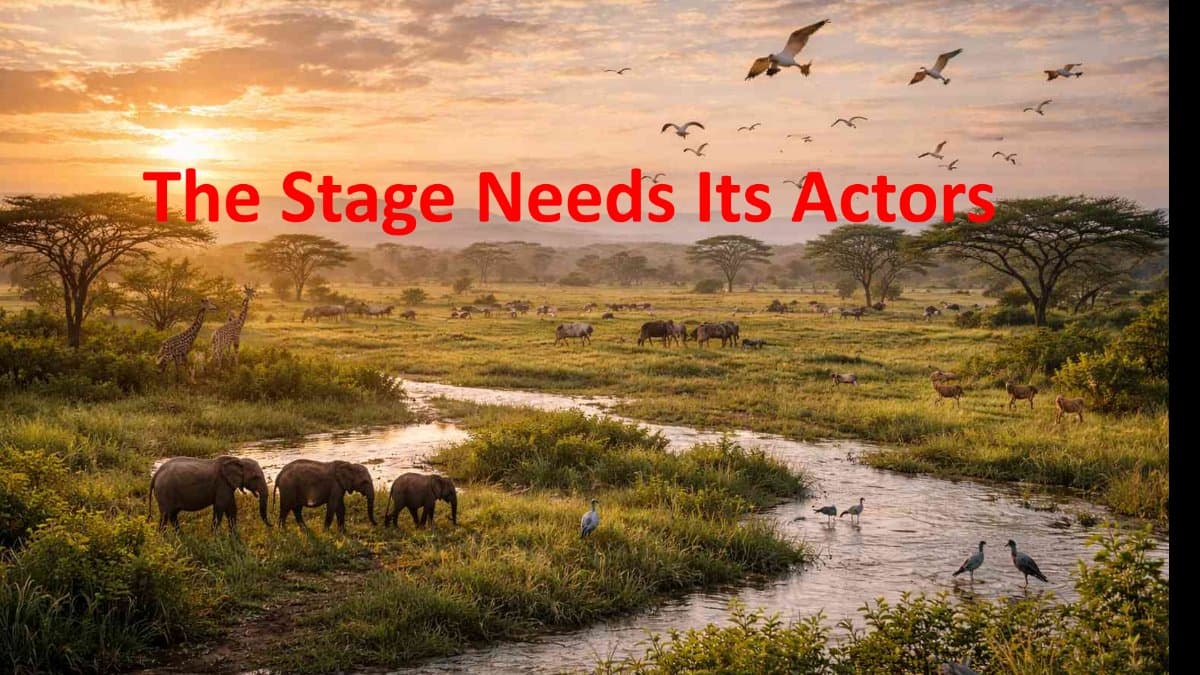
Landscapes without wildlife are like theatres without actors — each needs the other to truly function. For decades, conservation focused primarily on protecting habitats, but we now understand that's only half the story. Real ecosystem recovery requires the return of animals themselves, because wildlife is central to how the carbon cycle operates.
Healthy ecosystems shaped by thriving wildlife deliver a remarkable range of benefits: fresh water, carbon storage, flood and fire prevention, and socio-economic gains for local communities. Research increasingly confirms that biodiversity restoration — bringing animals back to the landscapes they once shaped — could be one of the most powerful climate solutions we have.
This is the story of rewilding's growing success, where nature's actors are returning to the stage and bringing life, balance, and hope with them.
Understanding "Animating the Carbon Cycle"
The concept of "Animating the Carbon Cycle" (ACC) represents a genuine paradigm shift in ecosystem science. Historically, the assumption was simple: plants create habitats for animals, but animals aren't abundant enough to meaningfully influence plants. As it turns out, that assumption was wrong.
"We're now discovering that's simply not true," explains Professor Oswald Schmitz of the Yale School for the Environment, a key originator of the ACC concept. "Restoring, rewilding, and conserving the functional role of vertebrate and invertebrate species can be a climate game changer — magnifying carbon uptake by 1.5 to 12.5 times across the world's ecosystems."
Animals influence the carbon cycle in myriad ways: through grazing, redistributing seeds and nutrients over vast areas, trampling soils, and triggering trophic cascades that ripple through entire ecosystems. They can increase carbon drawdown in plants, prevent wildfires, protect permafrost, and boost soil carbon retention. In short, wildlife restoration isn't separate from climate action — it is climate action.
Wildlife Restoration and Carbon Storage: 6 Powerful Examples
1. The Serengeti's Wildebeest: A Carbon Sink Reborn
Perhaps the most celebrated example of wildlife restoration's climate impact comes from the African savanna. In the 1950s, the rinderpest virus wiped out vast numbers of wildebeest, leaving roughly 25,000 km² of grassland ungrazed. The consequences were severe: dried, accumulated grass fueled massive wildfires that burned up to 80% of the area annually, making Kenya and Tanzania significant regional carbon emitters.
Then came a rinderpest vaccine. As the wildebeest population recovered, the transformation was remarkable:
Wildfire prevention: Almost no outbreaks occur today.
Carbon sequestration: Rejuvenated grasslands now capture CO₂ equivalent to the combined annual emissions of Kenya and Tanzania.
Ecosystem balance restored: The landscape shifted from a net carbon source back to a net carbon sink.
The mechanism is elegantly simple — wildebeest convert combustible biomass into dung that feeds the grassland, creating a virtuous cycle of carbon storage and ecosystem health.
2. Forest Elephants: Gardeners of the Carbon Cycle
Deep in the Congo rainforest, critically endangered forest elephants play an outsized role in carbon storage that scientists are still working to fully quantify. By trampling smaller vegetation, dispersing seeds, and creating pathways, these animals tilt the biological balance in favor of large, carbon-dense hardwood trees.
The numbers are striking:
Each forest elephant helps capture over 9,000 tonnes of CO₂ across its lifetime.
Elephant activity can increase aboveground biomass by up to 54 tonnes per hectare.
The IMF has valued Africa's forest elephants' carbon services at $150 billion per year.
Their disappearance could strip Central African rainforests of 7% of their biomass — roughly 3 billion tonnes of carbon, equivalent to France's annual emissions for 27 consecutive years.
Protecting elephant populations isn't just conservation — it's safeguarding one of Earth's most powerful natural carbon capture systems.
3. Wolves and the Landscape of Fear
In North America's boreal forests, wolves show how apex predators drive carbon storage through both predation and behavioral effects. A 2016 study found that by preying on moose, wolves significantly boost carbon storage in surrounding vegetation and soil.
But the deeper story is behavioral. The wolves' very presence creates a "landscape of fear" that constantly keeps moose on the move, preventing overgrazing in any single area. This allows shoots and saplings to grow, increases forest biomass, and feeds back into the carbon cycle. Researchers estimate that wolves could help increase carbon storage in their habitats by 99 billion metric tonnes annually — a staggering figure that underscores the power of ecosystem recovery driven by rewilding.
4. Sea Otters: Guardians of Kelp Forests
Off North America's coastlines, sea otters demonstrate trophic cascade thinking at its most elegant. These predators control sea urchin populations that, left unchecked, would devour entire kelp forests — one of the planet's most efficient blue carbon sinks.
Kelp forests protected by sea otters absorb 12 times more CO₂ than unguarded ones.
Sea otters support storage of up to 8.7 million tonnes of carbon annually by kelp.
This equals the yearly emissions of 4 million passenger cars, with a carbon service worth up to $400 million per year.
Where sea otter populations have declined, "urchin barrens" — seafloor landscapes stripped bare of biodiversity — have followed. Their recovery offers a proven, cost-effective path to restoring blue carbon ecosystems.
5. Beavers: Small Engineers, Massive Carbon Impact
Beavers may be small, but their effect on the carbon cycle is surprisingly large. By building dams and creating wetlands, they fundamentally transform landscapes and lock away substantial amounts of carbon in the process.
A 2012 study in Rocky Mountain National Park found that sediment upstream of active beaver dams contained about 12% carbon by weight, compared to less than 4% in abandoned beaver meadows. Active beaver meadows in the study area could potentially store 2.7 million tonnes of carbon — nearly four times the 736,000 tonnes held in abandoned ones.
Before European colonization, up to 400 million beavers lived across North America. Their near-extinction in the 1700s–1800s may have had a measurable impact on the global climate. Restoring beaver populations offers a triple win: carbon sequestration, flood prevention, and biodiversity enhancement — a compelling argument for wildlife restoration as climate policy.
6. Whales: Giants of the Ocean's Carbon Cycle
The ocean covers 70% of Earth's surface, and whales play a critical role in its carbon cycling. These marine giants influence the carbon cycle in both life and death through several mechanisms:
The Whale Pump: Whales dive deep to feed, then return to the surface, carrying dissolved nutrients that boost phytoplankton growth and pull carbon from the atmosphere.
The Conveyor Belt: Migrating whales release nitrogen-rich urea across vast ocean areas, stimulating phytoplankton blooms in nutrient-poor waters.
Deadfall Carbon: When whales die, their carcasses sink to the seafloor, sequestering carbon in deep-sea ecosystems for centuries.
IMF researchers estimate that restoring the global whale population from today's 1.3 million to the pre-industrial level of 4–5 million could support sequestration of more than 1.5 billion tonnes of CO₂ annually — more than the entire African continent's annual emissions.
Biodiversity Restoration at Every Scale
While megafauna capture the headlines, smaller species wield surprising influence. A 2017 study led by Professor Schmitz showed how different spider species shape grasshopper behavior in ways that ripple through ecosystem carbon dynamics. When active hunter spiders were prevalent, soil retained twice as much carbon as when "sit-and-wait" spiders dominated.
This is a vital lesson for biodiversity restoration efforts: carbon storage isn't just about elephants and whales. It depends on the full web of life — from invertebrates to apex predators — each playing its role in maintaining ecosystem balance.
Rewilding as Climate Policy: The Path Forward
Despite mounting evidence, old paradigms persist. "The idea still prevails that carbon capture and storage, on one hand, and wildlife conservation on the other, are unrelated, and even mutually exclusive," says Professor Schmitz. That urgently needs to change.
As Yadvinder Malhi of Oxford University observes, over the last five years the fields of climate science and ecosystem ecology have begun to converge — and the implications for climate change policy are enormous. Wildlife restoration, rewilding, and biodiversity recovery aren't niche environmental concerns. They are cost-effective, nature-based climate solutions with cascading benefits.
Key actions needed to move forward:
Protect existing wildlife populations from further decline
Restore degraded habitats and reconnect fragmented landscapes
Reintroduce keystone species where they've been lost
Expand marine protected areas to allow whale and fish populations to recover
Integrate wildlife conservation into national and international climate policy
Support community-led rewilding initiatives that also deliver socioeconomic benefits
Increase research funding to better quantify wildlife-carbon relationships
Conclusion: A Theatre Coming Alive
The evidence is overwhelming. Wildlife restoration isn't a luxury — it's a critical tool for stabilizing the carbon cycle and fighting climate change. From the Serengeti plains to the Congo rainforests, from North American rivers to the depths of the Pacific, animals are proving to be indispensable partners in ecosystem recovery.
As Magnus Sylven, co-director of the Global Rewilding Alliance, puts it: "Bringing back keystone species that can really make a difference in rebuilding the functionality of systems could make all sorts of animals important allies in combating climate change."
The stage is set. The actors are ready. By committing to biodiversity restoration and restoring wildlife populations to near-historic levels, we can supercharge nature's ability to mitigate climate change while building healthier, more resilient ecosystems for all life on Earth.
The question was never whether we can afford to restore wildlife. The question is whether we can afford not to.
❓ FAQ: People Also Ask
Q1: How does wildlife affect the carbon cycle? Wildlife shapes the carbon cycle in multiple ways — through grazing that prevents wildfires, seed dispersal that favors carbon-dense trees, nutrient cycling that boosts phytoplankton and plant growth, and behavioral effects (like the "landscape of fear") that prevent overgrazing. Research shows that restoring wildlife populations can magnify carbon uptake by 1.5 to 12.5 times in many ecosystems.
Q2: Can rewilding really help fight climate change? Yes — and the evidence is growing. Rewilding efforts that restore keystone species, from wolves and beavers to whales and elephants, have been shown to significantly increase carbon storage, prevent wildfires, and restore ecosystem balance. Scientists increasingly view rewilding as a cost-effective, nature-based climate solution that complements emissions reduction strategies.
Q3: What role do animals play in carbon storage? Animals contribute to carbon storage directly and indirectly. Elephants favor large, carbon-rich trees; beavers create carbon-trapping wetlands; whales fertilize phytoplankton that draws down atmospheric CO₂; sea otters protect kelp forests that absorb vast amounts of carbon. Each species plays a unique functional role in the broader carbon cycle.
Q4: How does biodiversity restoration help ecosystems recover? Biodiversity restoration rebuilds the web of interactions between species that makes ecosystems functional. When keystone species return, they restore predator-prey dynamics, nutrient cycling, vegetation patterns, and carbon flows. This leads to healthier soils, reduced wildfire risk, improved water quality, and greater resilience to climate change — benefits that extend far beyond the species themselves.