Why Scientists Call Daphnia the "Canary in the Coal Mine" of Freshwater Ecosystems
Swera Batool
June 18, 2026
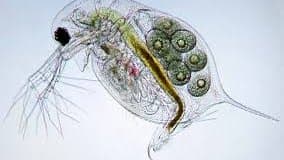
Rivers, lakes, ponds, canals: none of them exist in a vacuum. Agricultural runoff, industrial waste, too many nutrients, stray chemicals. Freshwater ecosystems absorb all of it, whether we notice or not. Spotting the damage before it gets out of hand is one of the harder problems in environmental science.
This is basically what bioindicators are for. Scientists watch certain organisms for early signs of trouble in a freshwater ecosystem, long before anyone could see the damage with the naked eye. Daphnia, a tiny freshwater crustacean most people know as the water flea, is one of the best examples out there.
It barely grows past a few millimeters, but Daphnia has turned into one of the most heavily used organisms in environmental monitoring and aquatic research anywhere. It reacts to pollution fast, faster than most things scientists study, and that's earned it a nickname: the "canary in the coal mine" of freshwater ecosystems.
What Is a Bioindicator Species?
Put simply, a bioindicator is a living thing that tells you something about its surroundings just by how it's doing. If a bioindicator's survival, growth, reproduction, or behavior starts to shift, that's usually a sign something's off, often long before anyone could measure it any other way.
Why bother with a living organism instead of just running chemical tests? Because chemistry alone doesn't always show how pollutants actually hit living things. A pond can test fine on paper while everything living in it is already struggling. Watching a sensitive species react gives researchers a head start: catch the disturbance early, and there's still time to do something about it.
Plenty of creatures can act as freshwater bioindicators. Daphnia just happens to be one of the better ones, for a few specific reasons.
Why Daphnia Responds Quickly to Environmental Change
Daphnia lives right in the water column, filtering constantly as it feeds, so it's exposed to whatever's in that water almost the moment it shows up. Shift the temperature, the nutrients, the oxygen, the chemical load, even slightly, and Daphnia's growth, survival, or reproduction tends to show it.
It also helps that Daphnia breeds fast. A short life cycle means several generations can pass in the time it takes other species to barely finish one, so researchers get to watch environmental stress play out across generations in a fraction of the time. That's hard to pull off with bigger, slower organisms.
Then there's the transparency. Daphnia's body is basically see-through, so researchers don't have to guess what's happening inside; they can just look. That alone makes it a favorite for lab work.
Daphnia and Water Quality Monitoring
Environmental monitoring programs have used Daphnia for decades now. The setup is simple: drop Daphnia into a water sample, watch how it behaves. A few things tend to give away the state of the water pretty reliably: how many survive, how well they reproduce, how fast they grow, how they swim, how they feed.
Healthy Daphnia stay active and reproduce at a steady clip. Stressed Daphnia don't. Slower movement, odd behavior, fewer offspring, higher death rates: any of that can point to pollution or conditions that just aren't right. And because Daphnia reacts fast, those signs tend to show up early, which is the whole reason it works as an early-warning tool for freshwater ecosystems.

Pollution, Pesticides, and Early Warning Signs
Tracking pollution is probably the single biggest use of Daphnia research. Pesticides, fertilizer runoff, all sorts of farm chemicals end up in nearby ponds, canals, rivers, and reservoirs, and once they're in the water, they affect aquatic life in plenty of ways.
Daphnia tends to show the strain before bigger organisms do. Pollutants can cut reproduction, change feeding habits, slow growth, or kill outright. Some Daphnia survive just fine on the surface but pick up quieter physiological or behavioral changes that hurt them over time. Either way, scientists get useful information about water quality and ecological risk, and catching it early means there's still a chance to stop the damage from spreading.
Daphnia in Freshwater Ecosystem Health
Why Daphnia Is Called the "Canary in the Coal Mine"
The phrase goes back to old mining practice. Miners carried canaries into coal mines because the birds reacted to toxic gas long before a person would notice anything wrong. A distressed canary meant get out, now.
Daphnia plays a similar role for freshwater. It tends to react to pollution before the wider ecosystem shows any visible damage, often among the very first organisms to respond once pollutants enter the system. A shift in its behavior, its reproduction, or how many survive can be the first hint that something's going wrong.
It also sits in a tight spot in the food web. Trouble for Daphnia doesn't stay contained to Daphnia. Fish, aquatic insects, anything depending on it directly or indirectly, eventually feels it too. That's the whole point of calling it a canary: it gives scientists a heads-up before the danger really takes hold.
Environmental Monitoring Systems and Daphnia
Keeping a close eye on the environment matters if freshwater biodiversity is going to survive, and Daphnia gives researchers a workable way to do that. Monitoring systems built around Daphnia let scientists catch pollutants early, check water quality, gauge environmental risk, track change over time, and inform conservation decisions.
As human activity puts more strain on freshwater resources, this kind of biological monitoring isn't going away. If anything, it's becoming more necessary. Daphnia is a good case study in how much information a tiny organism can hold. Its reactions tell scientists a lot about how these ecosystems work and how pollution actually affects them, not just on paper.
Conclusion
Daphnia has quietly become one of the more important organisms in freshwater science, even though it's small enough that most people would never notice it. Between its role in the food web, its fast life cycle, and how sensitive it is to environmental change, it's turned into a real, working tool for keeping tabs on ecosystem and water quality health.
The "canary in the coal mine" label fits well. Flagging problems early is basically what Daphnia is built to do. Watching how it responds lets scientists spot pollution, weigh ecological risk, and shape real plans for protecting freshwater systems.
As pressure on freshwater environments keeps building, paying attention to organisms like Daphnia is only going to matter more. These tiny water fleas are a good reminder that the smallest things in an ecosystem are often the first to say whether it's healthy or not.