When a Leopard wears a Tiger’s name: How a Single Word Can Undo Years of Conservation.
Muqadas Mukhtar
July 12, 2026
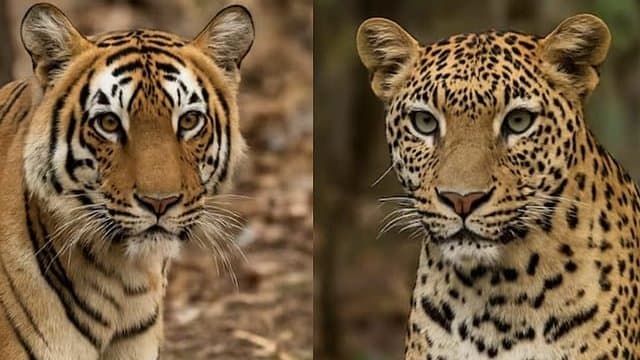
A couple of days ago a video was circulated on social media platforms in Pakistan of a leopard being called a tiger by a national level journalist, which practically anyone who has ever been around big cats can tell is indeed a leopard. The video got a lot of views. The correction spread at a slower pace, as usual, if at all.
You could easily say that this was a minor oversight. A confused name, a niggling detail in a generally uninteresting news story. But a species identity is never a minor detail, as any wildlife biologist will tell you. It is the core of all conservation, public safety and ecological knowledge. Make a mistake in front of a couple of million people and you are not just wrong you have sown a lie in the minds and memories of people that will take years to uproot.
What makes the Mix-Up so interesting? What’s not trivial about the Mix-Up?
In the minds of the public, leopards and tigers are not close relatives, they are often grouped together under the term “the big scary cat that may attack livestock or people. Their biological and ecological distinctiveness, however, is vast, as they are different animals with different range, behavior and conservation status in Pakistan. For decades the wild tiger population here has been effectively wiped out. Leopards, especially common leopard, continue to survive in small numbers in the north and in some parts of Punjab and Sindh in a shrinking habitat, where they are increasingly coming in contact with human settlements.
Such a distinction is a significant one with respect to public reaction. You tell people a “tiger” was spotted near a village and they come up with an image of a man-eating monster from legend, something that most people have seen only in a zoo enclosure or a Bollywood movie. Panic follows quickly. Explain truthfully to them that it was a leopard, an animal that has lived side by side with rural people, albeit awkwardly, for generations.Explain to them correctly that it was a leopard; an animal that has lived side by side with rural people, not exactly peacefully, but for generations. People are aware of the fact that leopards tend to avoid contact with humans, that any contact is likely to be provoked and that the best way to respond is caution, not sticks and stones.
Misidentification isn’t only a nuisance to the storyline. It affects the emotional context of the story and the emotional area is the one that will influence people’s behaviour in the public sphere.
The Real World Fallout
This is when it’s more than an academic debate and it’s a conservation emergency. Leopard populations in Pakistan are already facing serious threats from habitat fragmentation, prey depletion and retaliatory killings due to livestock predation. All of those threats are exacerbated, not reduced, by a media narrative that makes a quiet, secretive cat into a man eater.
In rural communities on the periphery of leopard populations, real choices are being made based on what they’re hearing and seeing in the media. A villager who thinks a “tiger” is roaming around is more likely to support or even participate in a retaliatory hunt than one who realises that it is actually a leopard and that a leopard has no desire to relate to a human being. For years, wildlife departments and conservationists work to establish trust and administer community awareness programs to diminish this kind of fear based violence. It can take a lot of valuable time in an afternoon to be undone by a single viral clip with the wrong species name in it.
Also, there is a quieter cost credibility. A single incorrect claim, that goes viral and is subsequently debunked, with its spread often limited to scientific or wildlife communities, but seldom to the same level of exposure as the initial clip, erodes the public’s trust in wildlife reporting by another millimetre. The information people use on wildlife news comes to be taken with a grain of salt, making it more difficult to rally genuine concern when a real crisis, such as a surge in poaching or a habitat collapse, strikes.
But, sensationalism is not journalism.
This is not one clip, one reporter. The stories of wild animals near settled places are, by their nature, dramatic a visual that is almost guaranteed to be a good story, and a perfect headline. When it comes to clicks and shares, it’s easy to go for the scarier word, the more dire interpretation, the leap to fear.
That’s what journalism is all about, but not spectacle. It is not the role of a wildlife reporter to simply report what is visually exciting but to report what is true and to accept that here “true” is not subjective. Species identification can be tested. This would have been solved in minutes had a picture been sent to any zoological department, to any wildlife NGO or to any of the growing citizen-science networks that monitor Pakistan’s wildlife. This was not done because the answer was difficult to come up with. It was not done because sensational has overtaken the accuracy.
The characteristics of an effective accountability system.
However angry, criticism on social media gets washed away in a news cycle. A more appropriate standard is a newsroom that has the basic step of verification into its process when reporting on wildlife, similar to a business desk who wouldn’t publish a company’s earnings without checking the numbers. Wildlife departments and zoology and wildlife biology programs held at universities can be much more proactive in making themselves available as a fast-response verification source for journalists, instead of just jumping in to the fray after the damage has been done.
There’s the possibility that the regulatory entities that police standards could fine the same way they would any other factual error, with consequences instead of just a serious on-air correction days later, which most people don’t even see.
The Bigger Picture
None of this is about hitting one journalist, hitting one channel. It’s about understanding that language is a key determinant of wildlife treatment. A leopard named a tiger isn’t simply a typo in a news story; it’s a tiny little push towards fear, push towards conflict, push towards the kind of public sentiment that makes conservation a challenge rather than something it’s supposed to be.