What Is the Largest Organ in the Body? (Skin, Liver, and Spleen Explained)
AIMAN
August 16, 2026
What Is the Largest Organ in the Body? (Skin, Liver, and Spleen Explained)
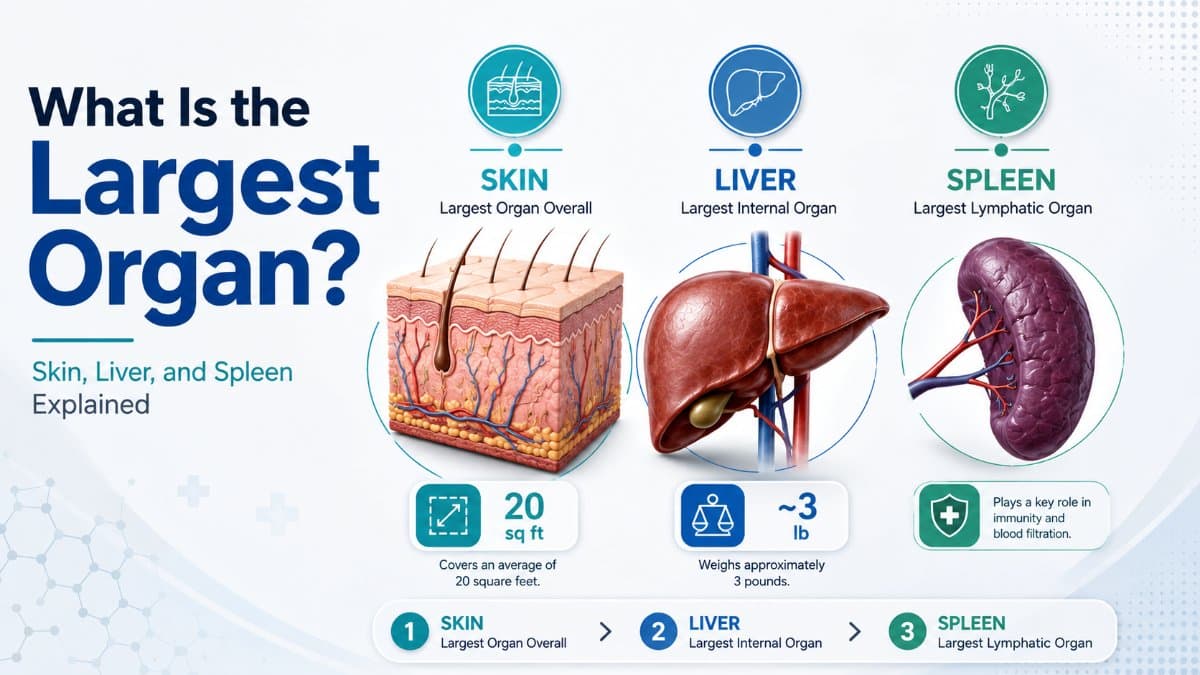
The skin is the largest organ in the human body, covering an average of 20 square feet and weighing between 8 and 11 pounds in most adults. If you're asking about internal organs specifically, the liver takes the top spot, and among organs of the immune system, the spleen is the largest lymphatic (lymphoid) organ.
Most people search this question expecting a one-word answer, but "largest organ" actually depends on which measurement you mean — surface area, weight, or organ system. This guide breaks down all three so you leave with the full picture, not just a fact you'll forget by tomorrow.
Table of Contents
The Skin: Largest Organ in the Body Overall
The Liver: Largest Internal Organ
The Spleen: Largest Lymphatic Organ
Largest Organs Compared (Table)
Why "Largest" Depends on How You Measure
How These Organs Work Together
FAQ
Key Takeaways
The Skin: Largest Organ in the Body Overall
When someone asks what is the largest organ in the human body, they're almost always looking for the skin. It qualifies as an organ because it's made of tissues working together for a shared purpose, and it beats every other organ on both surface area and, in most adults, total weight.
An average adult's skin covers roughly 20 square feet and accounts for about 15% of total body weight. It's not just a covering — it's a fully functional organ system with three distinct layers:
Epidermis — the outer, waterproof layer that gives skin its color and forms a barrier against pathogens
Dermis — the middle layer containing collagen, blood vessels, nerve endings, hair follicles, and sweat glands
Hypodermis (subcutaneous layer) — the deepest layer, made mostly of fat and connective tissue that cushions and insulates the body
Skin does far more than hold everything in place. Its core functions include:
Regulating body temperature through sweating and blood vessel dilation
Acting as a barrier against bacteria, viruses, and environmental toxins
Producing vitamin D when exposed to sunlight
Housing millions of nerve endings responsible for touch, pressure, and pain
Preventing water loss and dehydration
Because skin is visible and constantly renewing itself — the outer layer sheds and regenerates roughly every 27 days — it's also one of the clearest windows into overall health. Dermatologists often spot early signs of nutritional deficiencies, autoimmune conditions, and circulation problems just by examining skin changes.
The Liver: Largest Internal Organ
If your question is really about what is the largest internal organ in the human body, the answer shifts from skin to liver. Since skin sits on the outside of the body, most people instinctively mean "internal" when they think of organs — which is where the liver comes in.
The liver weighs about 3 pounds in a healthy adult and sits in the upper right side of the abdomen, tucked under the rib cage. It's a reddish-brown, wedge-shaped organ divided into two main lobes, and it's involved in more than 500 distinct bodily functions.
Key roles of the liver include:
Filtering toxins, drugs, and waste products out of the bloodstream
Producing bile to help digest fats
Storing glycogen for quick energy release
Regulating blood clotting through protein production
Metabolizing nutrients absorbed from the digestive tract
One of the liver's most remarkable traits is its regenerative capacity. Unlike most organs, it can regrow to nearly its original size even after losing up to 70% of its tissue, which is why living-donor liver transplants are medically possible. This unique ability to self-repair is one of the clearest examples of why the liver is considered both the largest internal organ and one of the most resilient.
The Spleen: Largest Lymphatic Organ
A smaller but still common search is what is the largest lymphatic organ in the body (sometimes phrased as the largest lymphoid organ). That title belongs to the spleen.
About the size of a fist and weighing roughly 5–7 ounces, the spleen sits in the upper left abdomen, just below the rib cage. It's part of the lymphatic system, which supports immune defense and helps regulate blood.
The spleen's main jobs include:
Filtering old or damaged red blood cells out of circulation
Storing platelets and white blood cells for future use
Helping the body fight bacterial infections
Recycling iron from destroyed red blood cells
Unlike the liver, the spleen isn't essential for survival — some people live healthy lives after a splenectomy (spleen removal), though they typically need extra vaccinations and closer monitoring for infections afterward. Still, under normal conditions, it's the largest organ dedicated specifically to lymphatic and immune function.
Largest Organs Compared
OrganCategoryAverage WeightPrimary FunctionSkinLargest organ overall8–11 lbsProtection, temperature regulation, sensationLiverLargest internal organ~3 lbsDetoxification, digestion, metabolismSpleenLargest lymphatic organ5–7 ozImmune defense, blood filteringBrainLargest nervous system organ~3 lbsCognition, control of body functionsLungs (combined)Largest respiratory organ~2.5 lbsGas exchange, breathing
Why "Largest" Depends on How You Measure
There's no single wrong answer to "what's the largest organ" — the confusion comes from mixing up categories. Here's the simplest way to think about it:
By total size and weight (including external organs): Skin wins
By weight among internal-only organs: Liver wins
By role within the lymphatic system: Spleen wins
By surface area alone: Skin still wins, though some researchers argue the small intestine's absorptive lining (with all its folds and villi) technically has more surface area — a distinction that rarely comes up outside of academic debate
This is why search engines and AI tools sometimes give slightly different first answers: they're responding to subtly different phrasings of the same core question.
How These Organs Work Together
Skin, liver, and spleen don't operate in isolation — they're part of interconnected systems that keep the body functioning:
Skin acts as the first line of defense, physically blocking pathogens before they enter the body.
If pathogens do get through, the spleen and broader lymphatic system help identify and destroy them.
The liver filters toxins and byproducts from the blood, including waste generated during immune responses.
Understanding this relationship helps explain why liver disease can sometimes show up as skin symptoms like jaundice, or why an enlarged spleen is often flagged during a physical exam as a sign that something elsewhere in the body needs attention.
FAQ
What is the largest organ in the human body? The skin is the largest organ in the human body, covering about 20 square feet and making up roughly 15% of total body weight.
What is the largest internal organ in the body? The liver is the largest internal organ, weighing around 3 pounds and performing over 500 functions related to digestion, detoxification, and metabolism.
What is the largest lymphatic (lymphoid) organ in the body? The spleen is the largest lymphatic organ, responsible for filtering blood and supporting immune function.
Is the brain the largest organ? No. The brain weighs about 3 pounds, similar to the liver, but it's classified as the largest organ of the nervous system, not the body overall.
Can you live without your spleen? Yes. The spleen isn't essential for survival, though people without one are generally more susceptible to certain infections and may need additional vaccines.
Why does skin count as an organ? Skin qualifies as an organ because it consists of multiple tissue types (epidermal, connective, nervous, glandular) working together toward shared functions like protection and temperature regulation.
Key Takeaways
The skin is the largest organ in the body overall, by both weight and surface area.
The liver is the largest internal organ, handling detoxification, digestion, and metabolism.
The spleen is the largest lymphatic/lymphoid organ, supporting immune defense.
"Largest organ" depends on the category you're measuring — external, internal, or system-specific.