What Do Elephants Eat? A Complete Guide to the World's Biggest Appetite
Amna Razzaq
September 8, 2026
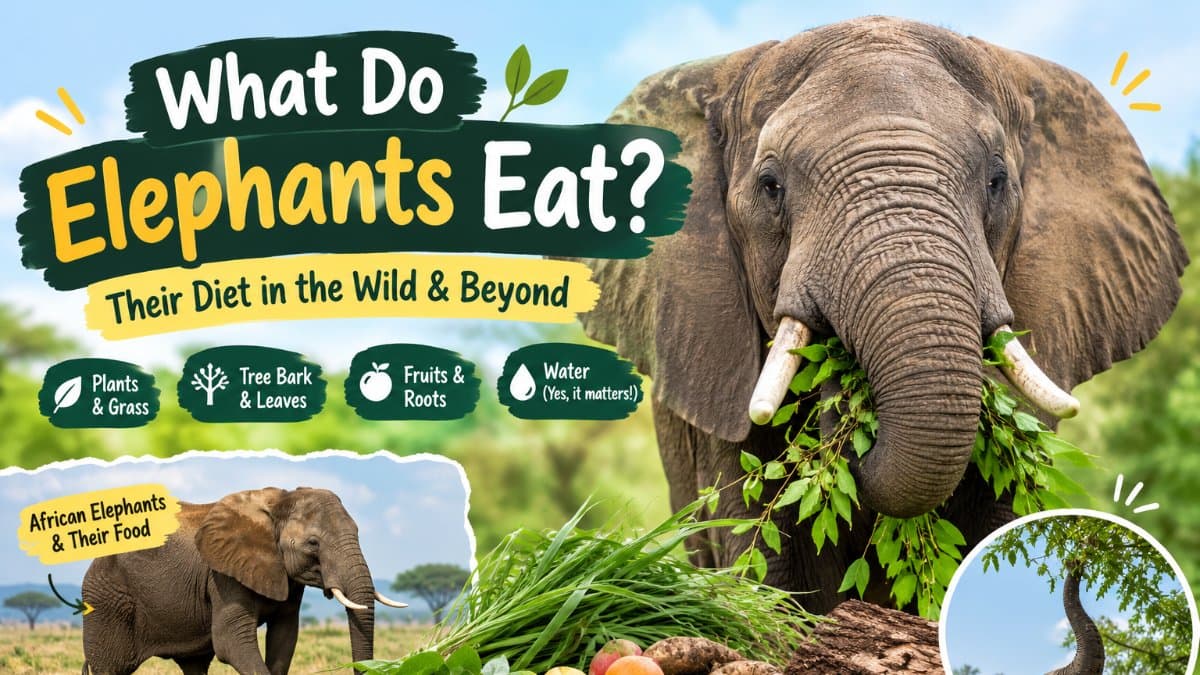
What Do Elephants Eat? A Complete Guide to Their Diet
Few animals eat as much as an elephant. If you've ever wondered what do elephants eat, the short answer is: an enormous variety of plants, consumed in truly staggering quantities. It's one of the most impressive feeding habits in the animal kingdom — not because of what's on the menu, but because of how much of it disappears every single day.
Here's everything you need to know about elephant eating, in the wild and beyond.
What Does a Wild Elephant Eat?
Elephants are herbivores and eat only plants. In the wild, their diet includes:
Grasses — usually the most abundant part of an elephant's diet when available
Leaves and branches — pulled straight from trees and shrubs
Bark — stripped from trees with the trunk and tusks for fibre and moisture
Roots and tubers — dug up from underground using the trunk and tusks
Fruits — figs, mangoes, and other seasonal fruit when available
Twigs, shrubs and bamboo — especially in forested areas
Because elephants are both grazers (eating low-growing grass) and browsers (reaching into trees and shrubs), they can access food sources that many other animals can't.
Elephants Aren't Picky Eaters
In short: elephants will eat almost anything edible in the plant kingdom that they can find. Their trunk works like a multi-tool — strong enough to strip bark from a tree, precise enough to pick a single piece of fruit, and forceful enough to dig several feet down for roots. That flexibility is exactly what allows elephants to thrive in such different habitats, from dense forests to dry savannas.
What Does an African Elephant Eat?
African elephants live mainly in open savannas and grasslands, so their diet leans heavily on grasses and herbs. They rely on:
Grasses and stems
Bark, stripped using their tusks
Shrubs and low vegetation
Fruit when available, such as wild figs
Their strong, muscular jaws let them strip bark and pull up tough shrubs, making the most of the drier, coarser vegetation typical of savanna habitats.
What Do Asian Elephants Eat?
Asian elephants live mostly in forested regions, and their diet reflects that. Unlike their African relatives, they feed heavily on:
Leaves and browse vegetation from trees
Bamboo, a dietary staple in many forest habitats
Fruit, foraged throughout the forest canopy and floor
Because forests offer a denser mix of vegetation than open savanna, Asian elephants tend to have more variety readily available year-round, though they still spend most of their day foraging to meet their enormous food needs.
Elephants' Favorite Foods
When elephants have a choice, they do have clear favorites:
Fruit — a true delicacy in the wild, and elephants play a major role in dispersing seeds across their habitat as they eat and move
Bamboo — especially prized by Asian elephants
Bananas — when available near human settlements
Young grass and leaves — particularly after rainfall, when they're tender and more nutritious
Like most animals, elephants will choose the easier, tastier option — ripe fruit over tough, fibrous bark — whenever it's available.
How Much Do Elephants Eat Each Day?
This is where the numbers get genuinely impressive. An adult elephant eats between 300 and 375 pounds (140–170 kg) of food a day, with large African elephants sometimes eating even more. To hit those numbers, elephants spend about 80% of their waking hours eating.
Quick Facts: Elephant Diet by the Numbers
Elephants can't digest everything they eat — as much as 30–60% of what they consume passes through undigested, which is part of why they need to eat so much in the first place.
They drink an enormous amount of water too: 20–30 gallons a day, sometimes up to 40, drawn up through the trunk and sprayed into the mouth.
Pregnant elephants eat even more than usual to support their growing calf.
Do Elephants Eat Meat?
No — elephants are strict herbivores. Their entire diet is made up of plant material: grasses, leaves, bark, roots, and fruit. They have no dietary need for meat, and their digestive system is built specifically to process large volumes of tough plant fibre rather than animal protein.
FAQs About What Elephants Eat
Do elephants eat meat?
No. Elephants are herbivores and eat exclusively plants — grasses, leaves, bark, roots, and fruit make up their entire diet.
How much food does an elephant eat in a day?
An adult elephant eats roughly 300 to 375 pounds (140–170 kg) of food daily, and spends around 80% of its waking hours eating to keep up with that need.
What's the difference between what African and Asian elephants eat?
African elephants live in open savannas and eat mostly grasses, shrubs, and bark. Asian elephants live in forests and rely more on leaves, bamboo, and fruit foraged from tree canopies.
What is an elephant's favorite food?
Elephants tend to favor fruit, tender young grass and leaves after rainfall, and — for Asian elephants especially — bamboo.
How much water do elephants drink each day?
Elephants drink 20 to 30 gallons of water a day, sometimes up to 40, using their trunk to draw water up and spray it into their mouth.
The Bottom Line
So, what do elephants eat? In short: grass, leaves, bark, roots, fruit, and almost any other plant they can get their trunk on — all consumed in massive amounts by an animal built to eat nearly all day long. Whether it's an African elephant stripping bark on the savanna or an Asian elephant foraging for bamboo in the forest, the pattern is the same: a huge body, a strictly plant-based diet, and a near-constant search for the next meal.