The Tiny Titans Next Door
Amna Razzaq
June 17, 2026
They weigh less than a grain of rice. They live underground. Most of us step over them without a second glance. And yet, ants might just be the most hardworking, selfless, and quietly extraordinary creatures on the planet.
A City Beneath Your Feet
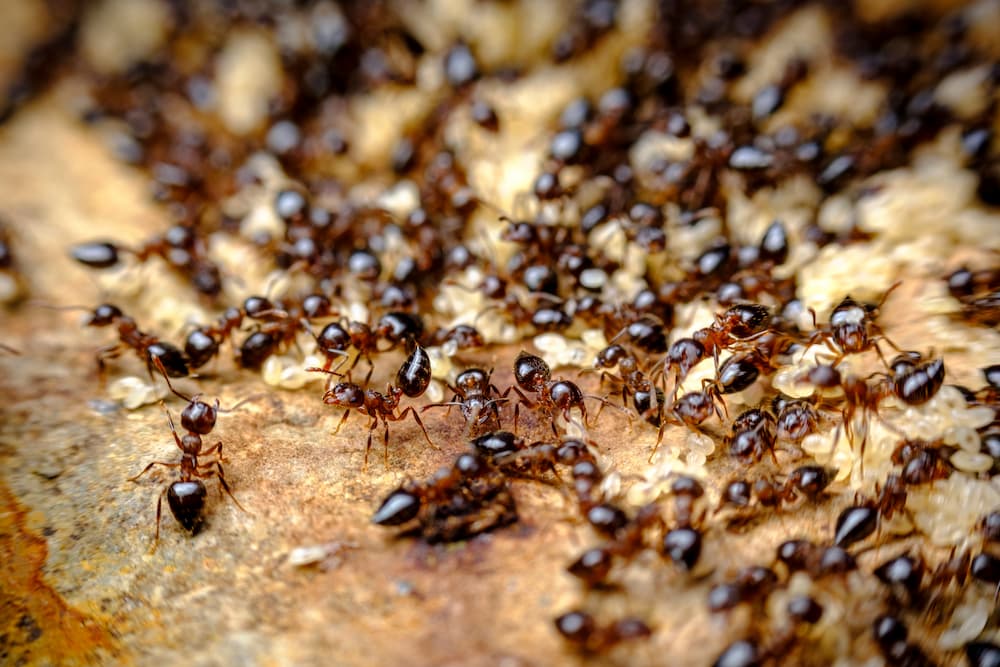
Right now, beneath the soil in your garden, under the crack in your sidewalk, inside the hollow of an old tree there is a city humming with life. It has roads. It has nurseries. It has farms, waste management systems, and even graveyards. It has a queen, soldiers, nurses, and engineers. And not one of them ever oversleeps, calls in sick, or forgets what they're supposed to do. This is an ant colony and it runs like clockwork that has never once needed winding.
Workers Who Never Ask for a Day Off
The worker ant almost always female spends her entire life in service to others. She carries food many times her own body weight (imagine lifting a small car with your teeth and walking a mile). She scouts unfamiliar territory, laying invisible chemical trails so her sisters can follow. She tends to the eggs, fans the larvae, and feeds the queen all without complaint, all without recognition. She doesn't do it for glory. She does it because that is what she is, and somehow, that makes it more beautiful.
Leaf Cutters: The World's First Farmers
Long before humans ever figured out agriculture — about 50 million years ago, give or take leafcutter ants had already invented farming.
They snip pieces of leaves, carry them back in long, winding processions that look like green ticker-tape parades, and use them to grow fungus underground. That fungus is their food. They tend it, weed it, protect it from disease, and have been doing so for tens of millions of years without ever losing the recipe.
The next time someone says "humans are the most intelligent species," just remember: ants were farmers when our ancestors were still figuring out how to walk upright.
The Queen: Misunderstood Matriarch
She is often imagined as a ruler barking orders from a throne. But the queen ant is something far more poignant she is, in many ways, a prisoner of purpose.
She mates once, early in her life, on a single extraordinary flight through the sky. Then she lands, sheds her wings (she will never fly again), and spends the rest of her life — which can last 20 to 30 years laying eggs in the dark.
She doesn't command. She doesn't control. She simply produces, endlessly, trusting that the thousands of daughters she brings into the world will carry on what she started.
They Talk Without Words
Ants are completely deaf to sound as we know it. They have no vocal cords. And yet, a colony of a million ants coordinates with breathtaking precision.
Their language is chemistry pheromones released into the air and soil, carrying messages as nuanced as any sentence: danger here, food this way, follow me, she has died. When an ant finds a crumb, she doesn't keep it secret. She leaves a scent trail home, essentially writing directions in the air for every sister behind her.
When a colony senses a threat, the alarm signal travels ant to ant like electricity through a wire. Within seconds, an army mobilizes.
No meetings. No memos. No group chat.
What Ants Teach Us
There is something quietly humbling about watching an ant. She doesn't wonder whether her work matters. She doesn't stop halfway up a wall to question her purpose. She carries her leaf, tends her fungus, guards her queen, and when her short life ends, another ant takes her place seamlessly, without mourning, without pause.It is not a sad life. It is a complete one. In a world that often rewards noise and ego, ants remind us of the quiet dignity of showing up, doing your part, and trusting that the whole is greater than any single self.
One Last Thing
The total weight of all ants on Earth is estimated to roughly equal or even exceed the total weight of all humans. They are everywhere. They have always been here. And long after we are gone, on some warm afternoon millions of years from now, there will still be a small determined creature carrying something twice her size across the dirt, leaving a trail for the others to follow.
And that, honestly, is enough.