Daphnia's Hidden World: How the Water Flea Lives, Moves, and Feeds
Swera Batool
June 22, 2026
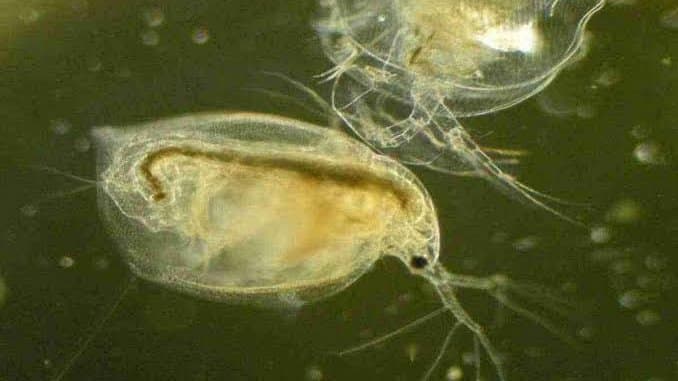
Most people picture wildlife as something large: a deer, a heron, maybe a trout breaking the surface of a lake. Few think of a creature smaller than a grain of rice. Yet that's exactly what keeps so many freshwater food webs running. Daphnia's nearly see-through body, no bigger than a pinhead, hides a surprisingly busy life. Scientists usually just call it the water flea, and once you watch it swim, the nickname makes sense immediately. So what do Daphnia eat, how does it move, and how long do Daphnia live? Those questions, plus why something this small matters so much, are exactly what this piece sets out to answer.
What Is a Daphnia?
It's a freshwater crustacean in the order Cladocera, part of a larger group of zooplankton drifting through ponds, lakes, reservoirs, and canals almost everywhere on the planet. Most individuals top out at a few millimeters, smaller than a grain of rice. Despite that, the impact on freshwater ecosystems runs far bigger than the size suggests. Quick reproduction and a fast response to shifting conditions have turned this organism into one of the most studied subjects in aquatic biology.
Anatomy of a Daphnia
Transparency is what really sets this creature apart. The shell-like carapace covering its body is so clear that, under a simple microscope, you can watch Daphnia's heart pump, follow the path of its gut, and sometimes spot embryos developing in a brood pouch on its back. A single, fused compound eye sits near the top of the head, with a pair of long, branched antennae extending just below it, doing double duty as sensors and as the main tool for getting around. Rows of small thoracic limbs line the underside of the body, sweeping food particles toward the mouth with every beat.
How Does a Daphnia Move?
Those antennae do most of the work. Quick, repeated strokes push the body forward in short bursts rather than a smooth glide, producing the jerky, hopping motion that earned the nickname water flea in the first place. The same motion stirs the surrounding current past its feeding limbs, which works out nicely, and lets the animal dart away the instant a predator gets close.
What Do Daphnia Eat?
So what does a Daphnia eat in the wild? Almost entirely microscopic algae, bacteria, and bits of organic debris, strained out using comb-like feeding legs. That grazing habit helps keep ponds and lakes clearer by holding algae blooms in check. The same small body that filters algae also becomes lunch for fish larvae, young fish, and various aquatic insects, which is basically the answer to what eats water fleas. People raising their own cultures often ask what can I feed Daphnia at home; baker's yeast, spirulina powder, and a dose of green water usually do the job.
Daphnia Life Cycle and Lifespan
Growth begins inside a brood chamber, where juveniles develop before being released into open water and growing larger with each successive molt. When conditions are good, food is abundant, temperatures are stable, females reproduce asexually through parthenogenesis, churning out genetically identical offspring without needing a male at all, and populations can explode within days. Stress flips the switch: cold spells, food shortages, or declining conditions push females toward sexual reproduction instead, producing tough, dormant eggs that simply wait until things improve. So how long do Daphnia live? Typically anywhere from a few weeks to a couple of months, shaped largely by temperature, food supply, and overall conditions.
Is a Water Flea a Primary or Secondary Consumer?
Mostly a primary consumer. Algae and phytoplankton, the primary producers in any freshwater system, make up the bulk of the diet, which is the main reason ecologists place this animal in that category. Bacteria and decomposing organic matter round out the menu too, though, and that's enough for some researchers to argue it occasionally plays a partial secondary consumer role as well, blurring the lines of the aquatic food chain a little.
How to Raise Daphnia and Make Green Water
Setting up a culture at home isn't complicated. A simple tank just needs dechlorinated, room-temperature water, light aeration, and steady lighting. Most breeders feed their stock green water, an algae-rich brew that's easy to make yourself: leave pond runoff or lightly fertilized tap water sitting in direct sunlight for several days until it turns visibly green. Drop in a small starter culture, hold the conditions steady, and breeding takes care of itself, often producing more than enough live food for aquarium fish and fry within a couple of weeks.
Why Daphnia Are Important in Freshwater Ecosystems
There's more at stake here than algae control and fish snacks, though. Daphnia's biology reacts so quickly to pollution, temperature swings, and shifting conditions that researchers treat it as an early-warning signal in environmental monitoring and ecotoxicology studies. When numbers drop, the effects don't stay contained, fish populations and the wider food chain feel it too. Size has surprisingly little to do with ecological weight, and this creature is a pretty good example of why.
Frequently Asked Questions
What do Daphnia eat? Mostly microscopic algae, bacteria, and bits of organic matter filtered straight from the surrounding environment. In a home culture, baker's yeast, spirulina powder, and green water are common substitutes.
How does a Daphnia move? By beating its large antennae rapidly, which produces a jerky, hop-like motion rather than a smooth swim, the same hopping action that gave the water flea its name.
How long do Daphnia live? Typically a few weeks to a couple of months. The exact span depends heavily on temperature, food supply, and overall conditions in its habitat.
Is a water flea a primary or secondary consumer? Mainly a primary consumer, since the diet leans heavily on algae and phytoplankton. Eating some bacteria and organic detritus on the side gives it a partial secondary consumer role too.
How do you make green water for Daphnia? Leave a container of pond runoff or lightly fertilized tap water sitting in direct sunlight for several days until algae builds up and it turns visibly green; that nutrient-rich brew makes an ideal live food source for a culture.