Human Wildlife Conflict The Predictable Cost of Progress and Shrinking
Swera Batool
January 31, 2026
Human–Wildlife Conflict: The Predictable Cost of Progress and Shrinking Ecological Space
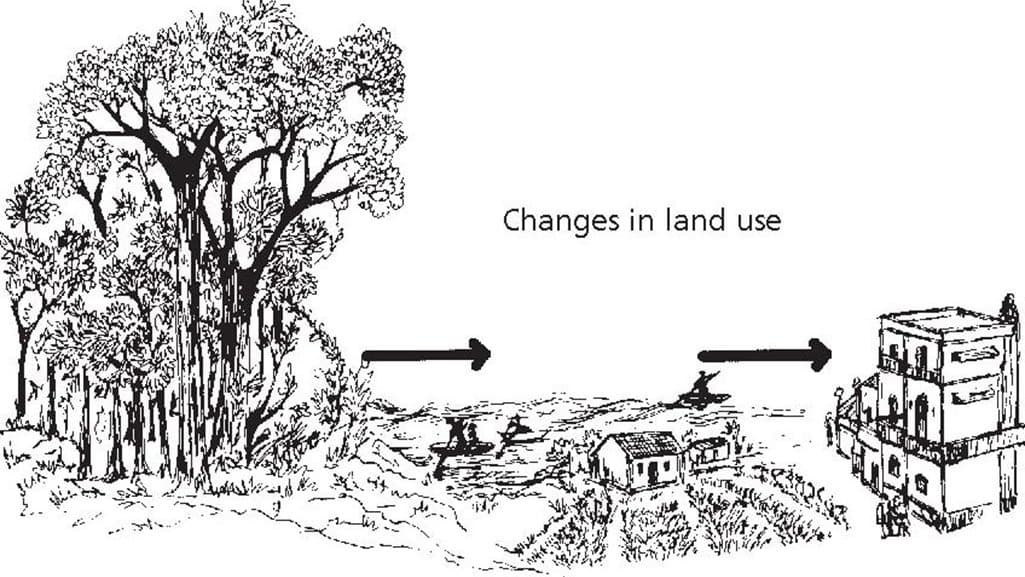
Human–wildlife conflict is often narrated through moments of crisis: a leopard straying into a village, a farmer mourning the loss of livestock, or a wild animal killed in retaliation. Yet these episodic scenes conceal a deeper and more uncomfortable reality. Such conflict is neither sudden nor accidental. It is the logical outcome of land use change and its cumulative impact on ecosystems — a development model that steadily expands human activity into landscapes that were never empty.
Across the world, losses caused by wildlife and the killing of livestock are rising. From the pastoral rangelands of East Africa to the mountain pastures of South Asia, herders and small farmers stand on the frontlines of an ecological confrontation they did not design. In Kenya and Tanzania, attacks on livestock by lions and hyenas are increasing along the edges of protected areas and wildlife management areas whose boundaries are clear on maps but meaningless to animals. In Europe, the return of wolves under conservation policies has generated political tension in rural France, Germany and Italy, where even limited losses have become symbolic crises. In North America, ranchers struggle with predators while highways and expanding settlements cut across migration routes that wildlife has followed for centuries. In western China, pastoralists on the Tibetan Plateau report rising losses of yak and sheep to snow leopards and wolves as grazing pressure, fencing and infrastructure projects alter traditional rangelands.
What these regions share is not animal behaviour, but shrinking ecological space — the direct consequence of habitat fragmentation across landscapes once wide enough to sustain both people and wildlife. Habitat fragmentation, broadly defined as the breaking apart of continuous natural habitat into smaller and more isolated patches, lies at the core of this crisis. Large mammals and apex predators are now confined to these fragmented patches, surrounded on all sides by human activity. When natural prey declines and predator–prey relationships are disrupted by the severing of corridors, conflict with people and livestock becomes inevitable. The damage that follows is frequently framed as wildlife "overstepping its limits," when in reality it is planning failure that has erased those limits.
A Global Pattern: Human–Wildlife Conflict From the American West to Central Asia
In the United States, this contradiction is especially visible in the American West. Gray wolves, reintroduced and naturally dispersing into states such as Wyoming, Montana and Colorado, increasingly prey on cattle and sheep grazing on open rangelands that overlap with historical wolf territory. Ranchers, operating on narrow economic margins, view each loss as a direct threat to livelihood. Meanwhile, suburban expansion into forested areas of California and Colorado has brought black bears and mountain lions into neighbourhoods where unsecured waste, pet food and landscaping attract wildlife. These encounters are frequently described as "animals entering human spaces," though housing developments and road networks have steadily advanced into wildlife habitat. The ecological geography has shifted; the narrative has not.
A similar pattern is unfolding in China, where rapid infrastructure development intersects with biodiversity recovery. In provinces such as Yunnan and Shaanxi, expanding forest cover and conservation successes have supported rebounds in wildlife populations including Asian black bears, wild boar and even large herbivores such as elephants in the southwest. Yet villages and farms now lie embedded within mosaics of recovering forest, plantations and roads. Crop raiding, livestock losses and property damage have increased, not because wildlife behaviour has fundamentally changed, but because land use change has produced new points of contact at the edges of recovering ecosystems. On the Tibetan Plateau, snow leopards benefiting from improved protection sometimes prey on livestock grazing near settlements, creating tensions similar to those seen in Pakistan's northern mountains.
The Himalayan Frontline: Pakistan's Quiet Crisis
In Pakistan, this crisis is quieter but no less severe. In remote areas where livestock represents the primary economic asset, losses to wildlife are a persistent reality. In Gilgit-Baltistan and northern Khyber Pakhtunkhwa, snow leopards prey on goats and sheep grazing in high-altitude pastures. For subsistence herders, the loss of even a few animals can destabilise an entire household economy. These incidents rarely make headlines, yet their cumulative impact is profound. Retaliatory killings have already weakened fragile snow leopard populations — especially as natural prey and suitable habitat continue to decline.
Elsewhere, in Azad Jammu and Kashmir, Murree, Swat and parts of Punjab, common leopards prey on calves and small livestock. Housing schemes, orchards and roads have compressed forested landscapes to the point where the distance between settlement and predator is sometimes only a few steps. Each encounter is treated as an exceptional accident, though it is in fact the predictable outcome of landscapes that no longer leave space for wildlife.
Along the desert fringes of South Punjab, Balochistan and Sindh, wolves and jackals attack livestock in environments already stressed by drought and climate variability. Here, human–wildlife conflict is inseparable from poverty. As grazing lands degrade and water sources disappear, people and wildlife are forced to depend on the same shrinking resources.
Europe's Rewilding Dilemma: When Conservation Success Outpaces Preparedness
In Germany, the return of wolves after decades of absence illustrates how ecological recovery can collide with unprepared landscapes. Wolf populations expanding from eastern regions into Saxony, Brandenburg and beyond have encountered agricultural zones dominated by sheep farming. Even where losses are statistically limited, they have acquired outsized political significance, fuelling debates over rural neglect, compensation mechanisms and the perceived imbalance between conservation policy and farming realities. The conflict is less about numbers than about trust — whether institutions can protect both biodiversity and livelihoods.
France presents a parallel tension in its Alpine and pastoral regions. Wolves recolonising from Italy now range across mountain pastures where sheep graze seasonally under traditional transhumance systems. Shepherds who already face labour shortages, market pressures and climatic stress must invest in fencing, guard dogs and night enclosures. Each predation event reinforces the perception that conservation policy imposes costs unevenly on rural communities, while urban populations benefit symbolically from species recovery. As in many regions, the ecological success of predator return has outpaced social and institutional adaptation.
Beyond the Crisis Narrative: Confronting the Governance Gap Behind Human–Wildlife Conflict
The cost of this conflict extends far beyond economic loss. Livestock depredation erodes trust in conservation, fuels hostility toward protected species and entrenches a sense of permanent insecurity in rural communities. Wildlife, in turn, suffers from poisoning, trapping and habitat fragmentation — placing long-term survival at risk. A cycle emerges in which no party truly wins.
Perhaps the most troubling aspect of this crisis is the persistent evasion of responsibility. Wildlife is portrayed as the aggressor, rural communities as the problem, and conservation as an obstacle to development. Rarely is attention directed at the underlying drivers: unplanned land use, short-term development priorities and the refusal to recognise ecological limits. Whether in the high pastures of the Himalayas, the ranchlands of the American West, the forests of central Europe or the plateaus of western China, the pattern is strikingly similar. Expanding roads, settlements, fencing and extractive projects reshape landscapes faster than governance systems can respond.
Pakistan lacks a functional national framework for ecological zoning and for compensating wildlife-related losses — leaving both rural households and vulnerable species to absorb the costs of structural neglect. Yet this governance gap is not unique. Even in wealthier countries, compensation schemes often lag behind actual losses, preventive support is uneven, and long-term land-use planning rarely integrates ecological connectivity as a core principle.
Animals do not recognise administrative borders, nor do they modify their behaviour according to zoning regulations. When forests are cleared, migration routes severed and prey depleted, wildlife does not "invade" human areas — it simply has nowhere else to go. Likewise, when farmers and herders react to losses, they are not rejecting conservation; they are responding to insecurity.
Human–wildlife conflict, therefore, is no longer merely an environmental issue. It has become a measure of how unevenly the costs of development are distributed, and how easily rural losses are normalised. Every animal lost — wild or domestic — points to a system that produces conflict rather than coexistence. Until land-use planning, compensation systems and conservation policy are aligned with ecological realities, recovery of wildlife populations will continue to generate friction rather than harmony. Until this reality is confronted, the cycle will persist — not because wildlife refuses to adapt, but because we continue to shape landscapes in which conflict is the only remaining option.