The Grey Hornbill: Nature’s Remarkable Story of Partnership and Survival
Swera Batool
April 29, 2026
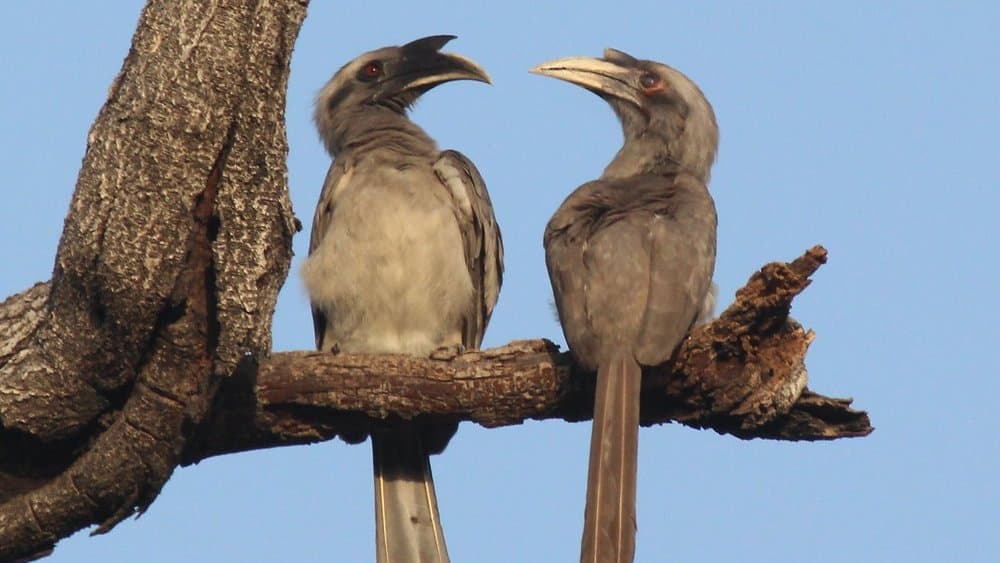
Across the forests and woodlands of sub-Saharan Africa and the Indian subcontinent lives a truly fascinating bird known as the grey hornbill. At first glance, it may appear like just another forest bird, but a closer look reveals a species that reflects the deeper complexity and beauty of biodiversity.
The grey hornbill is a medium-sized bird easily recognized by its long, curved beak and a distinctive casque on top. These features give it a unique appearance among forest birds, making it one of the most visually striking species in its habitat. But beyond its physical traits, it is the bird’s behavior especially during breeding season that makes it truly extraordinary.
A Unique Life Inside the Tree
One of the most remarkable aspects of the grey hornbill is its unusual nesting behavior. During the breeding season, the female hornbill enters a natural cavity inside a tree. Once inside, she seals herself within the cavity, leaving only a small slit open.
This behavior may seem unusual, but it serves a very important purpose in nature. By sealing herself inside the tree, the female creates a protected environment where she can safely lay eggs and raise her chicks. This natural enclosure reduces exposure to predators and external threats, offering safety during a critical stage of reproduction.
Inside this sealed space, the female remains completely dependent on the outside world for survival.
A Powerful Bond Between Male and Female
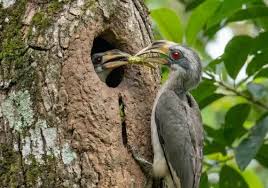
Once the female is sealed inside the tree cavity, the responsibility of survival shifts entirely to the male hornbill. He becomes the sole provider of food for the female and later for the chicks as well.
The male repeatedly travels between food sources and the nest, delivering nourishment through the small opening in the sealed cavity. This process continues consistently throughout the breeding period.
This behavior reflects a rare and powerful form of cooperation in the animal kingdom. The survival of the female and her offspring depends entirely on the dedication and effort of the male. At the same time, the successful reproduction of the species depends on this continuous cycle of trust and support.
Nature’s Symbol of Trust and Responsibility
The grey hornbill’s breeding strategy highlights an important aspect of natural behavior: survival is not always individual—it is often deeply interconnected.
The sealed nesting process and food delivery system show how both partners contribute in different but equally important ways. The female focuses entirely on reproduction and chick development, while the male ensures continuous nourishment and protection from outside the nest.
This division of roles reflects a strong biological coordination that has evolved over time. It demonstrates how species adapt unique strategies to survive and reproduce in their environments.
A Reflection of Biodiversity in Forest Ecosystems
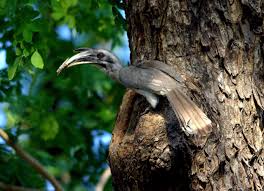
The grey hornbill is more than just a bird with unique behavior—it is a living example of how biodiversity functions in forest ecosystems. Every species plays a role in maintaining ecological balance, and the hornbill contributes to this natural system through its presence in woodland habitats.
Forests where such species exist are not just collections of trees and animals; they are interconnected systems where each organism plays a part in maintaining stability. The grey hornbill represents how wildlife adapts, survives, and interacts within these complex environments.
Understanding Nature Through Behavior
Studying species like the grey hornbill allows us to better understand how life in nature is organized. Its behavior during breeding season is a reminder that survival in the wild often depends on cooperation, adaptation, and resilience.
The sealed nesting process is not just a reproductive strategy—it is a reflection of how nature designs systems that maximize survival chances. At the same time, the continuous care provided by the male shows how behavioral roles evolve to support life continuation.
A Living Example of Ecological Balance
The grey hornbill stands as a reminder of the intricate balance that exists in natural ecosystems. Even small behavioral adaptations can have significant impacts on survival and reproduction.
Its life cycle reflects the deeper principles of biodiversity—interdependence, specialization, and cooperation. These principles are not limited to one species but are found throughout ecosystems across the world.
Conclusion: A Hidden Gem of Nature
The grey hornbill may not always be widely recognized, but it represents one of nature’s most fascinating survival strategies. From its unique beak structure to its extraordinary nesting behavior, it is a true reflection of biodiversity in action.
The bond between male and female hornbills during the breeding season highlights the importance of cooperation in nature. It shows how life in the wild is built not only on competition, but also on trust, responsibility, and shared survival.

Protecting species like the grey hornbill means protecting the delicate balance of forest ecosystems. Each species, no matter how small or hidden, contributes to the larger story of life on Earth.
Watch our video on