The Free Riders of Nature
Amna Razzaq
June 24, 2026
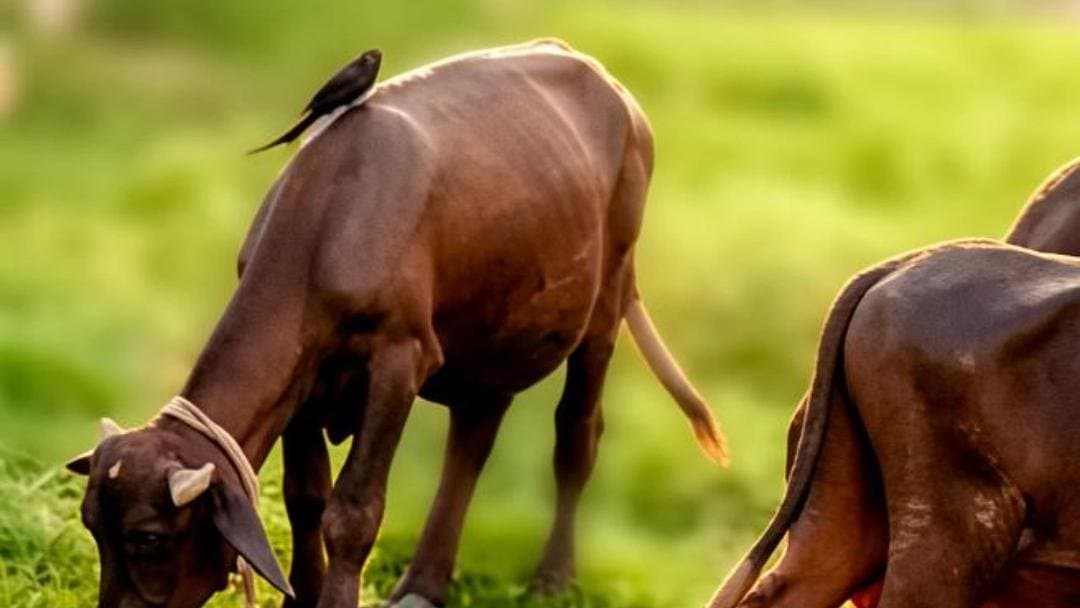
Like most of the stories in nature, it starts with a buffalo.
A buffalo is calmly walking through some grass, slowly eating it leaf by leaf, and wagging its tail at an imaginary object, perhaps sitting in the middle of a wheat field or somewhere on the outskirts of a town. It's not about the agenda; it's about the next steps and the next bite. It's unfussy, to say the least.
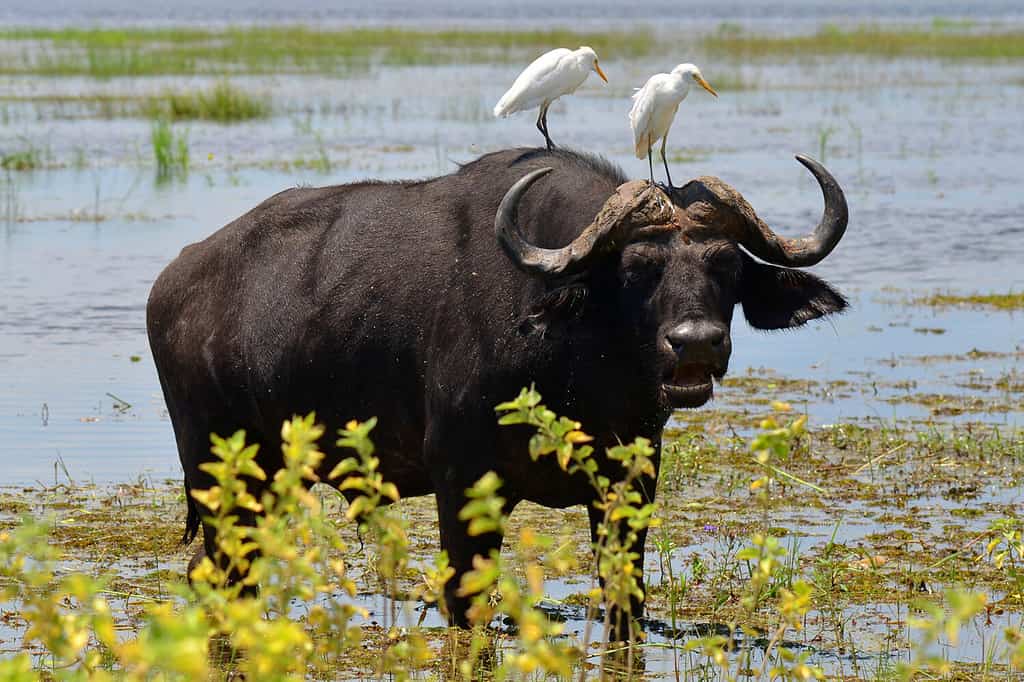
If you watch the buffalo's back, or the path a foot or two behind its slow hoofbeats, however, you will see something else altogether. A white bird, fresh as paper against the brown earth, hopping with quick and purposeful steps. It's not leaving the buffalo for love. It is following the buffalo because it's an opportunity. Each time a Bigfoot steps on them, they loosen the dirt and send the insects scuttling for their lives. Each time this magnificent tail strokes, a small frightened cloud of bugs rises. The bird, a cattle egret, patient and alert, awaits each one of them.
This connection has a name. It is called a relationship that ecologists refer to as "commensalism," which is derived from the Latin words for "sharing a table." In a commensal relationship, one organism benefits, while the other is not affected by the relationship. Not harmed. Not helped. Just indifferent. The buffalo is unaware of the egret. The egret is very aware of the buffalo.
This is straightforward, and it's true. After a while, however, you realize that commensalism, far from being a rare occurrence in nature, is a common phenomenon. It is everywhere. It is part and parcel of day-to-day life in all types of landscapes in Punjab. You can’t turn this sighting off once you know what it is.
This is one of the most enduring partnerships nature can arrange; the buffalo knows nothing about it, the egret doesn't care to, and that's that.
The common myna is the most persistent, while the cattle egret is the most dramatic. In the market, in the farm, at the roadside, in the playground of the school, wherever people and animals gather, there the myna is too, always black-headed and yellow-billed, and, with a forever suspicious expression and a constantly calculating face. It is the most opportunistic bird on earth, and it has made commensalism a way of life.
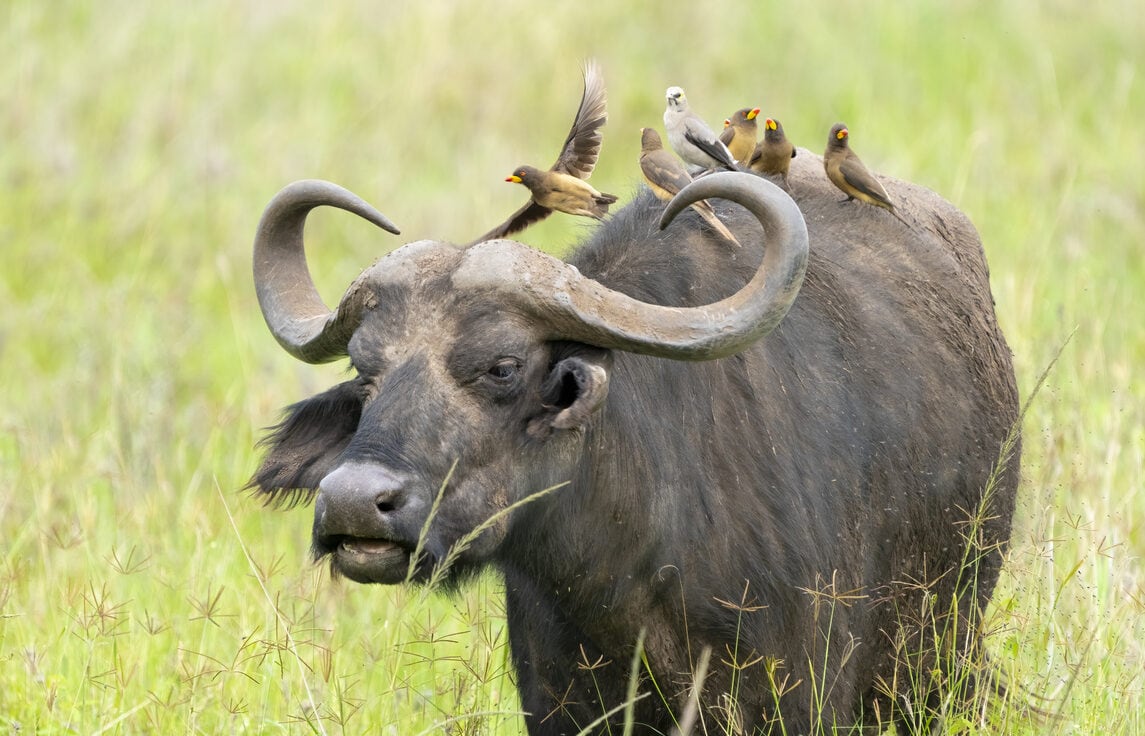
The myna follows the cows or goats as they go through the field. The myna is just a few steps behind as the person walks through the long grass, waiting for whatever is being disturbed. On the newly turned soil, mynas flock together in a noisy crowd, nosing around the area that has been disturbed. The driver of the tractor is not mindful of the myna. The mynas are only in their heads about the tractor driver.
Both birds have a knack for reading a situation that wasn't designed for them. There was no one who planted an area for cattle egrets. No one laid a road for the myna. But both have learned to make money, not out of whacking around but out of what goes on in their world, without changing it, without breaking it, without being invited.
It's the latter that makes commensalism seem almost refined. In this case there is no conflict. Nothing was to be done for the sake of a chase and a fight and a negotiation. The agreement is not one to which either the egret or the buffalo has agreed, and it is one that neither can discontinue. It just sits there quietly, day to day, season to season.
If you walk through any of the cities in Punjab, you will see a third part to this story, the house crow. The crow is sleek and clever, and it's near impossible to catch it off guard, and it has evolved to live among humanity, a commensalism-based lifestyle. We toss away food, and the crow finds it! We construct buildings, the nests of the crows. We are a source of waste; the crow is a resource.
The crow is not a threat to us. It doesn't serve us anything of which we know or request that we notice. It just seems to be everywhere we go, picks up what we drop, and vanishes amidst the city's cacophony. You have experienced commensalism when you have sat in an open-air canteen and seen a crow sitting 3 feet away as you eat your lunch. You were the buffalo; you were the buffalo. The egret was the crow.
Commensalism is a reminder in a world that so often is red in tooth and claw, with a lot of competition and predation and struggle, that a lot of nature is just... peaceful coexistence. One animal living and the other benefiting just because he's there.
In nature, "commensalism" asks nothing of its host; it is the most courteous relationship.
The next time you see a field of cows, see if you can spot the white birds! They will be there. The next time a myna follows a dog or a child playing in the garden, observe it for a few seconds. It isn't love for lack of good friends, which is to say. It follows because it knows that if it moves, then it has opportunity, and opportunity means it can survive.
The buffalo will continue to walk. The egret will continue to fly after that. Neither will ever have the other's name, and nothing can break this unspoken, non-confrontational relationship, unstated and very practical, designed for no one, lived by both without interruption.
That is, commensalism. Art of the Free Ride. The blessing of being in the right place at the right time.