Plastic Nests and Concrete Skies: The Cities We’re Building Are Quietly Killing Urban Birds.
Muqaddas Mukhtar
July 5, 2026
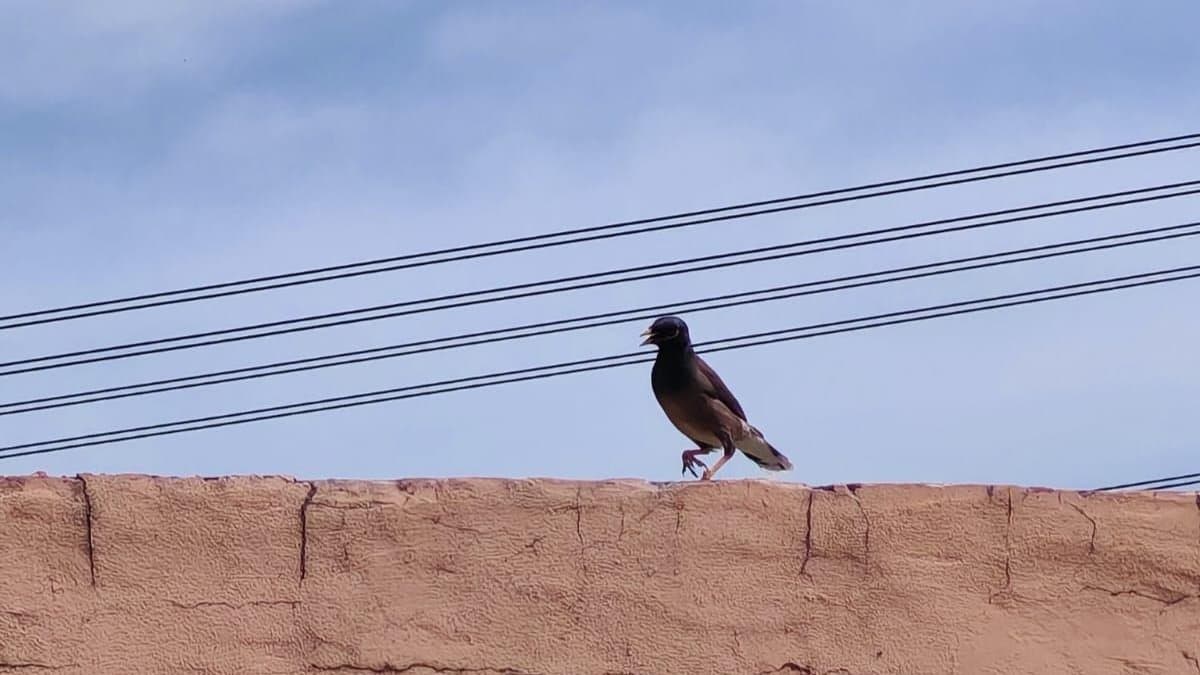
Stand outside almost anywhere in a Pakistani city at dawn and you’ll hear them before you see them the rolling chatter of House Sparrows in a roadside hedge, the confident caw of a House Crow above a chai stall, the sharp call of a Common Myna on a rooftop. The birds are still here. For now.
But spend enough time watching where they nest, what they build with, and what our cities are slowly becoming around them, and a more complicated picture begins to emerge. Pakistan is urbanizing at one of the fastest rates in South Asia, and the birds that have lived alongside human settlements for centuries are being asked to keep up. Some are managing. Others are quietly struggling. And without deliberate action, species that appear fine today may not be so in twenty years.
Pakistan Is Urbanizing Fast
Pakistan’s urban population has grown dramatically in recent decades, and the pace shows no sign of slowing. Mid-sized cities like Faisalabad, Gujranwala, Sahiwal, Multan, and dozens of smaller district capitals are expanding rapidly into surrounding agricultural and semi-natural land. Housing societies are replacing farmland. Canal banks are being cleared. The scattered trees and open patches that once stitched urban and rural landscapes together are shrinking year by year. Agricultural and semi-natural land. Housing societies are replacing farmland. Canal banks are being cleared. The scattered trees and open patches that once stitched urban and rural landscapes together are shrinking year by year.
This matters for birds because every acre of land converted into a city was, until recently, somebody’s habitat. Trees that held nests get cut down. Open fields that fed insect-eating birds become parking lots. Water bodies are filled in or polluted. For wildlife, urbanization is not background noise it is a direct and often sudden loss of the resources needed to survive, feed, and raise young.
What Urbanization Actually Does to Bird Communities
Research from cities across South and Southeast Asia paints a consistent picture of what happens to birds as urban development intensifies. In the early stages of urbanization when a city still has gardens, scattered trees, canal-side vegetation, and agricultural edges within its expanding boundaries bird communities remain relatively diverse. Generalist species thrive, and even some habitat specialists can find suitable microhabitats within the urban mosaic.
But as development densifies, this balance tips. Native vegetation disappears. Impervious surfaces expand. Noise, light pollution, and human disturbance levels rise. The ecological filter becomes increasingly selective, keeping in only those species flexible enough to exploit a human-dominated environment and pushing out those that cannot. The result, documented repeatedly in cities from Lahore to Kathmandu to Jakarta, is a gradual shift toward what ecologists call biotic homogenization a handful of adaptable generalist species, like crows, mynas, and pigeons, come to dominate, while the quieter, more specialized species decline or disappear. Selective, keeping in only those species flexible enough to exploit a human-dominated environment and pushing out those that cannot.
Studies in Nepal have shown that native tree cover is the single most important factor in maintaining urban bird diversity. Research in Lahore has documented the widespread incorporation of plastic and synthetic waste into bird nests a direct consequence of poor waste management in rapidly expanding cities. Work in Sri Lanka and Bangladesh has highlighted how the loss of traditional nesting structures, from old trees to thatch-roofed buildings, is forcing species into increasingly suboptimal nesting conditions.
The pattern is clear, the more a city grows without ecological planning, the fewer bird species it can support.
The Nesting Material Crisis Nobody Talks About
One dimension of urban bird ecology that deserves far more attention in Pakistan is what birds are actually building their nests from. In natural and rural environments, birds gather twigs, grasses, leaves, bark, feathers, and plant fibers materials that have been shaped by millions of years of evolution into effective nest structures that insulate eggs, repel parasites, and protect chicks.
In Pakistani cities, much of this material is no longer available. In its place, birds increasingly find plastic strips, synthetic threads, cloth fragments, rubber bands, wire, and paper the debris of everyday urban life. Research from across South Asia shows that urban birds are incorporating these anthropogenic materials into their nests at high rates, not because they prefer them, but because that is what the landscape now offers.
This matters more than it might seem. Synthetic ropes and fibbers can entangle and kill nestlings. Plastic components may expose developing chicks to chemical pollutants. Poor insulation from non-natural materials can affect egg temperature regulation and hatching success. These risks are not hypothetical entanglement deaths from nest materials have been documented in multiple species across Europe and Asia. In Pakistan, where urban waste management infrastructure remains severely underdeveloped, the exposure of nesting birds to synthetic debris is a growing and largely unmonitored problem.
What Needs to Change
Protecting urban birds in Pakistan requires action across several fronts simultaneously and the good news is that none of it demands extraordinary resources. What it demands is attention and intention.
Urban green space must be treated as essential infrastructure. Trees, shrubs, parks, roadside vegetation, and canal-bank greenery are not decorative features. They are the foundation of urban biodiversity. City master plans should map existing green corridors and include binding commitments to maintain and expand them, not as an afterthought but as a core component of urban development.
Waste management is a conservation issue. Reducing the availability of plastic and synthetic debris in urban environments directly reduces the risks birds face when gathering nesting material. Improved waste collection, enforcement of anti-dumping rules, and public awareness about plastic pollution are not just quality-of-life improvements they are wildlife protection measures.
Old trees and cavities must be preserved. Many bird species depend on tree holes and crevices for nesting. The routine felling of old or damaged trees in Pakistani cities eliminates irreplaceable nesting habitat. Simple policies requiring ecological review before tree removal, mandating replacement planting, installing nest boxes in parks can make a meaningful difference at low cost.