Neighbours Who Never Speak
Amna Razzaq
June 28, 2026
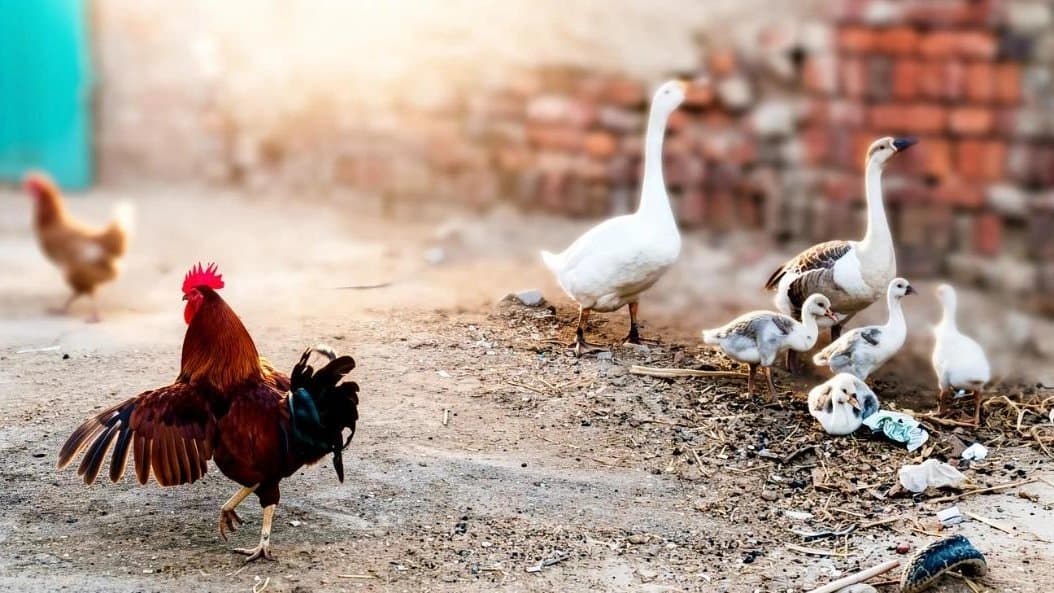
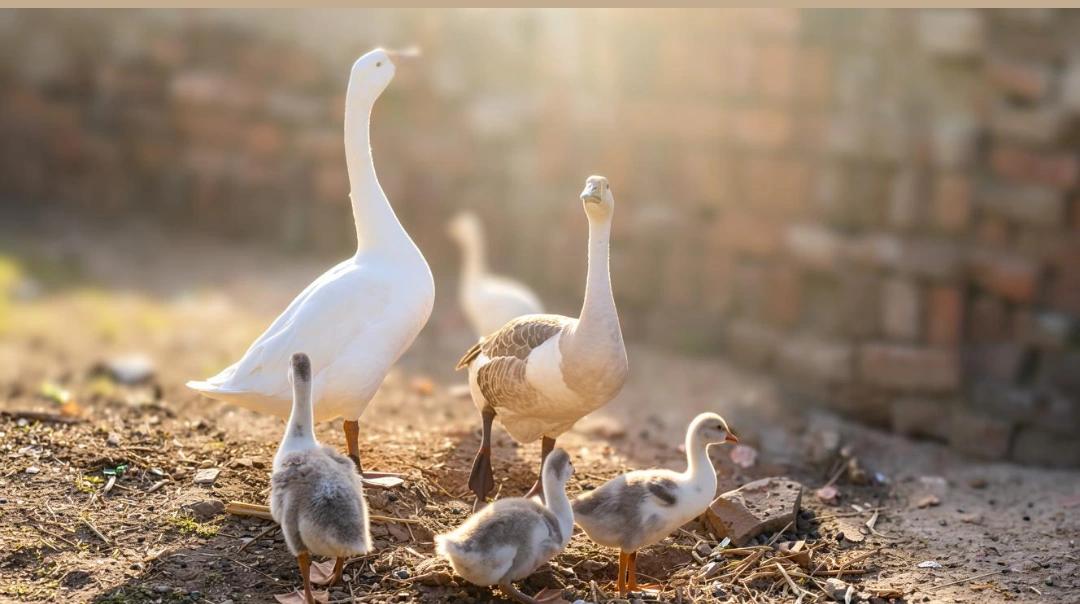
Two families have been living out of a village's yard, not a very big or notable one, for as long as people can remember. A family of ducks lives in a shallow pool of water that fills up after rainfall on the left side of the yard. A mother duck is broad and lazy, followed by seven ducklings in a wobbling line, wherever she treads. In the morning, they tip their heads into the water, sift through the muddy shallows and find out what little animals live there. In the afternoons, they sit and are happy, and they lie in a pile of feathers in the shade of an old wall. They live in their world, their world in the water, their world in the mud and their world in each other.
A family of hens lives on the right hand side of the same yard, close to the grain store and the dry straw. A mother hen with a flock of nine chicks, alert and active, scattering in a happy hustle and bustle around her feet. In the morning, they sit on top of the dry ground and scratch into it, peck at the seeds and insects and anything that their keen eyes see glinting in the dust. In the afternoons they take a dust bath in a shallow depression that they have prepared over the past weeks. They're completely lost in their own world, they're lost in this dry land, they are lost in the grain, they are lost in each other.
The two families share the same yard. They feed from the same area of the ground. Together they share the morning air and experience the warmth of the afternoon. But for all these weeks they have been sharing space, they never have been able to actually interact in any meaningful way. Ducks will not interfere with hens. The hens do not prey on the ducks. Both families are unable to provide the other with protection, food or any form of support whatsoever. The ducklings don't play with the chicks. The two moms have never once been recorded doing anything that would prove their existence to each other.
Truthfully but scientifically speaking, they are neutral.
Why this is more amazing than seems:
Observing animals, we wait for something to occur. We want the chase, the fight, the tender moment, the unexpected alliance. We are attracted to action, drama and the times when one life visibly alters by another. They are lacking in the duck family and in the hen family. They don't do anything with each other. So, it would seem, that's what it is. this type of relationship is known in ecology as neutralism which refers to two species occupying the same niche, but having no measurable impact on each other. There is no competition (they don't need the same resources and don't compete strongly enough for them). There is no predation as neither is a predator for the other. No mutualism as neither provides the other with any service. In ecological accounting terms it is a zero with no ambiguity—cold, causal, and pristine. At the end of each encounter, both species move away from the encounter without learning anything about the encounter itself, without changing their behavior in any way. They share a yard, and they want nothing to argue with since the ducks want water and mud, the hens want dry ground and grain.
This is the driving force behind neutralism: the division of needs. Not only is the duck family built for water, but their characteristics are also adaptable to it: they have broad flat bills to filter the mud while they eat, waterproof feathers, and webbed feet that make any puddle look like home. Feed on soft plant material, aquatic insects and small invertebrates near the water's edge. The hen family is designed for dry country; their beaks are sharp for pecking, their feet are powerful for scratching and they have a ravenous appetite for the seeds, grain and terrestrial insects. All their biology works against them. If they tried, they would not have been able to compete on any level. For that reason they don't attempt it. They share the yard, as two people on a wide pavement share the same strip of stone – co-present in the same place, running along their own pathway, but never meeting.
A Day in Two Lives
Keep an eye on the yard for the better part of a single morning, and you'll see exactly how these two worlds keep themselves separate, even when they share a space.
The ducks are up before the hens. During the "blue hour" before dawn, the mother duck guides her ducklings in a silent march towards the edge of the water. The duckling dips and surfaces and dips and surfaces leaving tiny V-shaped ripples in the still water. Sometimes it falls sideways to try and get to something it can't reach, then flapping with a few frantic flaps, it rights itself. The mother stands silently, with calm. When the hens come out of their nightly refuge, the ducks have already taken to their morning routine, with the quiet business they have in the puddle.
The hen family comes out boisterously. Mother hen walks out first, looks briskly and with authority at the door and then rushes quickly and in a scattered fashion the rest of the way across the yard to the grain area, where the mother is followed by her chicks. The tiny chicks scatter in all directions at once, and then return again and again, circling a somewhat harried sun. They scratch, peck, pause, turn their heads to the side to look at something and then move on. The soft, busy noises of chickens do what chickens do fill the yard.
During this morning rush, the hen family comes into the vicinity of the duck family within a few feet of them at some point. The chicks do not run around frightened, but because they don't like getting into the ducks' puddle. The ducklings aren't looking up. The mother hen doesn't stop. The mother duck does not raise her head out of the water. Two households, both in the same yard, registering each other as background. They walk by each other's homes every morning for a few feet. And every single morning nothing happens. This isn't a hostile indifference. It's a kind of indolence that springs from unimportance.
The Yard Is Everywhere
After spotting these two, you see that the duck family and the hen family are one way for a story to unfold in all kinds of habitats on earth. In nature, neutralism is not an exception. It's the norm — most species' interactions with most other species, most of the time.
Here are alternate versions of the story.
The Cattle Herd and the House Sparrow
Cows are grazing in a meadow. House sparrows make their nests in the hedgerow along the edge of the meadow and forage on the bare ground near the fence during the day. As the cattle walk, the soil crumbles, a little seed is occasionally exposed, but sparrows have been busy with the hedgerow drop; they don't often venture close to the herd to take advantage of it. The cattle are feeding on grass. The sparrows feed on seeds. They occupy the edges of the meadow, they do not ever require anything from one another.
Unlike the cattle egret, which actively locates insects disturbed by cattle. It is just a house sparrow that's nearby. Does not use to monitor movement of the cattle. It does not adapt its activities according to herd's movements. For its own reasons, it is in the same meadow, so the cows have nothing to do with it. Cows are scenery. The sparrows are there just to provide a background sound. A field of neutralism, on a common morning.