Is Fish Meat? Here's the Real Answer
Amna Razzaq
August 28, 2026
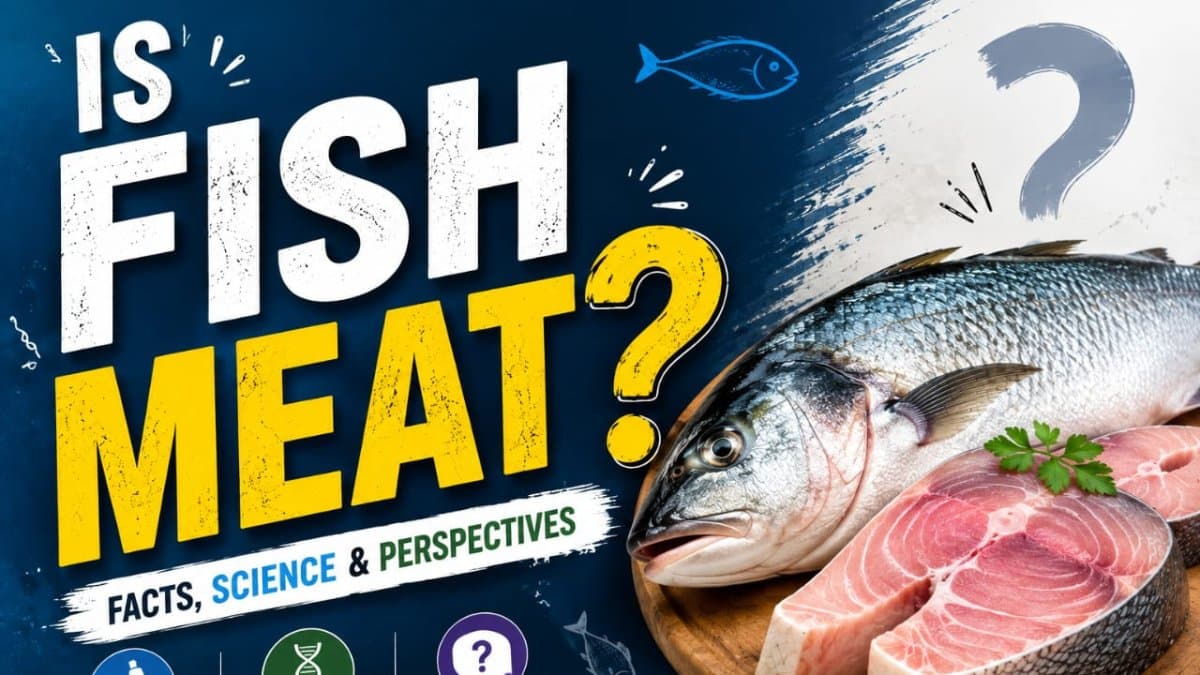
Is Fish Meat? Science, Religion and Diet Explained
Is fish meat? Yes. Biologically, fish is meat, because meat is the flesh of an animal eaten as food. But many religions and diets don't treat fish as "meat," which is why the answer changes depending on who you ask.
If you've ever wondered whether fish is meat or not while planning a meal, you're not alone. Ask a biologist, a Catholic, a nutritionist, and a vegetarian who still orders salmon, and you'll likely get four different answers. Below is the full picture, plus a short look at what fish themselves eat, since it affects the fish on your plate.
Is Fish Meat, Scientifically?
Short answer: yes. Meat is generally defined as animal flesh used as food. Fish is muscle tissue from an animal, so in the strict scientific sense, fish is a meat. Dictionaries such as Merriam-Webster define meat broadly as animal flesh, and fish fits that definition.
This is why online arguments about whether fish is a meat get so heated. People are usually answering different questions, one biological and one cultural, without realizing it.
Is Fish Considered Meat? Why Many People Say No
Short answer: it depends on context. Scientifically it's meat, but in everyday language, religion, and diet labels, fish often sits in its own category. Three reasons explain why:
Religious tradition. Catholics traditionally abstain from meat on Fridays during Lent and on days such as Ash Wednesday, but fish is allowed. In this tradition, "meat" refers to the flesh of warm-blooded land animals and birds, which excludes fish. Some Eastern Orthodox fasting traditions also permit fish on certain days while restricting meat. Rules vary by tradition and region, so check your own church's guidance.
Everyday language. In casual English, "meat" often means red meat and poultry. Fish gets its own menu section and its own grocery aisle.
Dietary identity. Pescatarians eat fish but avoid other meat, which treats the two as separate categories.
Example: A restaurant might list "vegetarian, fish, and meat" options separately. That's a cultural choice about labels, not a biological one.
Is Fish Considered a Meat in Vegetarian and Pescatarian Diets?
Vegetarian: Most definitions exclude fish, so vegetarians don't eat it.
Pescatarian: Fish and seafood are included, while other meat is excluded.
Catholic abstinence days: Fish is permitted.
So when people ask "is fish considered a meat," the accurate answer is: yes biologically, often no in religious and dietary systems.
Is Fish Red Meat or White Meat?
Short answer: fish is not red meat, and it's usually grouped with white meat or treated as its own category.
Red meat is defined by high myoglobin content, which gives beef, lamb, and pork their color. Most fish are lower in myoglobin and lighter in color. Some nutrition sources group fish with white meat such as chicken breast. Others place it in a separate category because its fat profile, texture, and cooking behavior differ. Either way, it's a distinct animal protein.
Is Fish Meat in Nutrition Science?
In nutrition, fish is classed as an animal protein alongside beef, poultry, and pork, but it's usually discussed on its own. Fatty fish, such as salmon and sardines, are commonly recognized as sources of omega-3 fatty acids. For nutrition specifics, check the guidance of your national food authority, such as the USDA.
What Do Fish Eat? (And Why It Matters for the Fish You Eat)
Short answer: it depends on the species. Fish diets vary widely:
Herbivores: feed mainly on algae and plants (parrotfish are one example).
Carnivores: eat other fish, crustaceans, or insects (tuna and pike are examples).
Omnivores: eat both plants and animals (carp is one example).
Filter feeders: strain plankton from the water.
This is more than trivia for two reasons:
Taste and quality can be influenced by diet. Farmed and wild fish often eat differently.
Contaminants: larger predatory fish tend to accumulate more mercury over time, which is why health agencies such as the FDA and EPA publish guidance on which fish to eat and how often.
What Fish Can Eat vs. What Fish Can You Eat
This phrase gets searched two ways:
If you mean what fish can eat (aquarium fish): most pet fish do well on species-appropriate flakes or pellets, with variety depending on whether the fish is herbivorous, carnivorous, or omnivorous. Overfeeding is a common mistake. Check the needs of your specific species.
If you mean which fish you can eat (as food): popular choices include salmon, cod, tuna, and sardines. If you're pregnant, feeding children, or eating fish often, check current FDA/EPA advice on mercury levels.
Quick Answer Summary
Is fish meat? Yes, biologically
Is fish considered meat? Yes scientifically
fish red meat? No
Is fish white meat? Often grouped that way, or a separate category
Is fish allowed on Catholic Fridays in Lent? Yes
Do vegetarians eat fish? No
Do pescatarians eat fish? Yes
What do fish eat? Varies: plants, algae, plankton, or other animals
Frequently Asked Questions
Is fish meat or not?
Yes, biologically. It is animal flesh. Some religious and dietary systems classify it separately.
Is fish considered a meat by vegetarians?
Yes, in most vegetarian definitions, so vegetarians avoid it. Pescatarians are the exception.
Why can Catholics eat fish on Fridays?
Traditional Catholic abstinence rules cover the flesh of warm-blooded land animals and birds, not fish.
Is fish red meat?
No. Fish generally has too little myoglobin to count as red meat.
Is fish white meat?
Often grouped that way, though some sources treat fish as its own category.
Is fish meat considered meat in nutrition?
Yes, as an animal protein, but it's normally discussed separately from red and poultry meat.
What do fish eat in the wild?
It depends on the species: algae and plants, plankton, insects, crustaceans, or other fish.
What can fish eat in an aquarium?
Most do well on quality flakes or pellets suited to their species. Research the needs of your specific fish.
The Bottom Line
Fish is meat in the plain biological sense: animal flesh eaten as food. Whether it "counts" as meat in daily life depends on whether you're using a scientific, religious, or dietary lens. The question has several correct answers, not one.
Want to learn more about fish? Explore our other fish articles, including Do Fish Sleep?, for more on how fish live, eat, and behave.