How to Plant Tulip Bulbs: A Complete Planting Guide
AIMAN
July 30, 2026
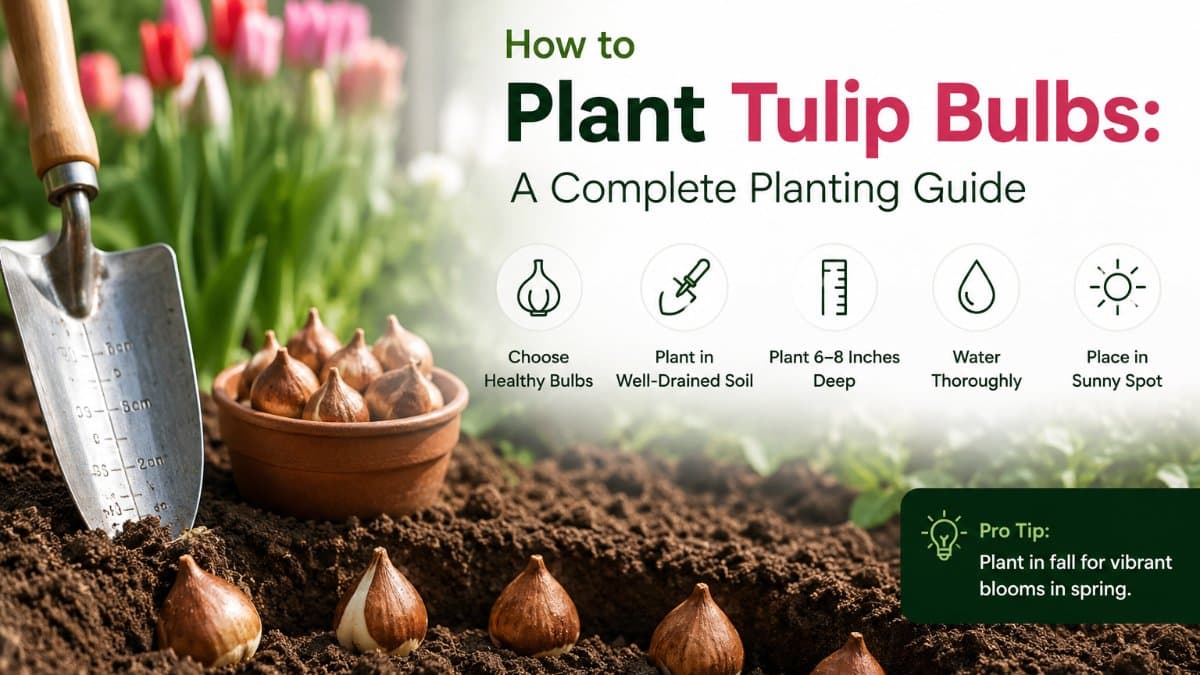
How to Plant Tulip Bulbs: A Complete Planting Guide
There's a reason tulips show up in almost every spring garden photo you've ever admired. They're inexpensive, they multiply if you treat them right, and they reward very little effort with a huge visual payoff. Knowing how to plant tulip bulbs correctly, though, makes the difference between a few scraggly stems and a bed that looks like it belongs on a postcard.
This guide walks through everything you need: the right planting window, the correct depth, step-by-step planting instructions for garden beds and containers, and what to do if you missed the fall planting season entirely.
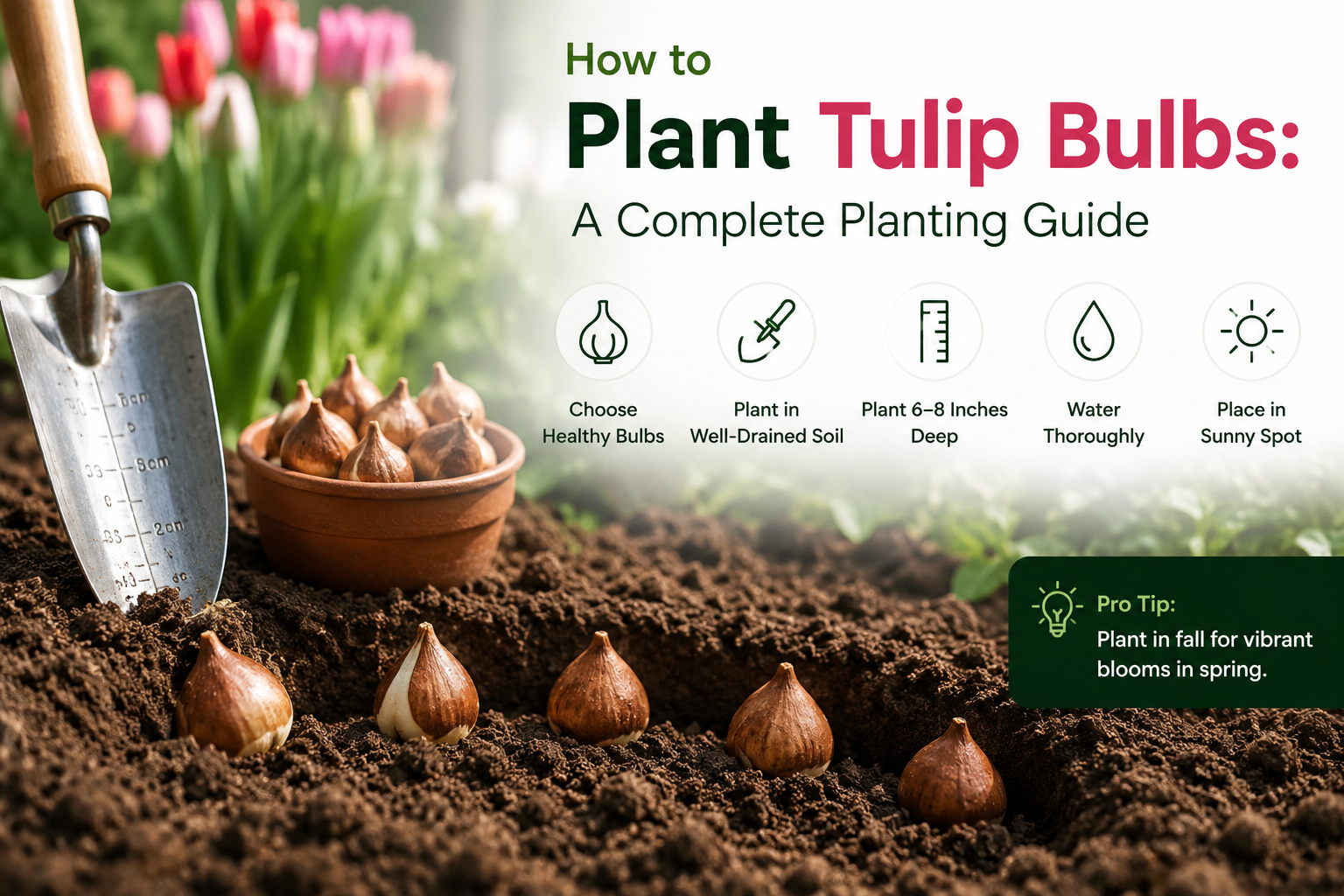
When to Plant Tulip Bulbs
Timing matters more with tulips than with almost any other bulb. Tulips need a long stretch of cold soil to develop strong roots before they push up leaves in spring, so when to plant tulip bulbs comes down to soil temperature, not the calendar date.
As a general rule:
Plant in fall, about 6–8 weeks before your first hard frost.
Wait until soil temperature at a 6-inch depth drops below 60°F (15°C).
In cooler northern climates, that usually means September to October.
In milder southern regions, November or even December is often better, since the ground stays too warm earlier in fall.
Planting too early, while the soil is still warm, encourages premature top growth that can be damaged by an early freeze. Planting too late doesn't give roots enough time to establish, which weakens the bloom the following spring. If you're ever unsure, a simple soil thermometer removes the guesswork.
How Deep to Plant Tulip Bulbs
How deep to plant tulip bulbs is a question with a fairly precise answer: most bulbs go 6–8 inches deep, measured from the base of the bulb to the soil surface. The general rule of thumb gardeners use is planting at a depth of about three times the bulb's height.
Bulb SizeRecommended DepthSpacing Between BulbsSmall (under 1.5")4–5 inches3–4 inchesMedium (1.5"–2")5–6 inches4–5 inchesLarge (2"+)6–8 inches5–6 inches
Planting too shallow leaves bulbs vulnerable to temperature swings and animal digging. Planting too deep can delay or weaken emergence. Always place the bulb pointed end up, flat end down — that flat end is where the roots will grow.
Step-by-Step: Planting Tulip Bulbs in the Ground
Here's the full process from start to finish:
Pick a sunny spot. Tulips need at least 6 hours of direct sun and well-draining soil. Soggy soil is one of the fastest ways to rot a bulb.
Loosen the soil to about 12 inches deep and mix in compost or aged manure to improve drainage and nutrients.
Dig planting holes to the correct depth based on bulb size (see table above).
Set the bulb pointed-end up and press it firmly into the soil so it makes contact with the bottom of the hole.
Space bulbs 4–6 inches apart for the fullest, most natural-looking display.
Backfill with soil and water thoroughly right after planting to help bulbs settle and start root growth.
Mulch lightly with a 2–3 inch layer of straw or shredded leaves to insulate against harsh freeze-thaw cycles.
After planting, you can largely leave the bed alone until spring. Tulips don't need regular watering through winter dormancy.
How to Plant Tulip Bulbs in Pots
Container planting is a great option if you have limited yard space, poor native soil, or want portable color for a patio or balcony. How to plant tulip bulbs in pots follows the same core principles as in-ground planting, with a few adjustments:
Choose a pot at least 10–12 inches deep with drainage holes.
Use a well-draining potting mix, not garden soil, which compacts inside containers.
Plant bulbs closer together than you would in the ground — shoulder to shoulder is fine, since pots are typically viewed close-up and a dense display looks fuller.
Plant at the same depth guidelines listed above, measuring from the bulb base.
In climates with harsh winters, move potted bulbs into an unheated garage, shed, or root cellar for winter, since container soil freezes faster than ground soil and can damage the bulbs.
Bring pots into indirect light once shoots emerge, then gradually into full sun.
Container-grown tulips are typically treated as annuals, since repeat blooming in pots is less reliable than in-ground planting.
Can You Plant Tulip Bulbs in the Spring?
This is one of the most common questions gardeners ask after missing the fall window, and the honest answer is: it's not ideal, but it's not impossible either.
Tulip bulbs require a cold period, generally 12–16 weeks below 40–45°F (4–7°C), to trigger the biological process that produces flowers. Without it, bulbs planted directly in spring soil usually won't bloom that same season, and may struggle the following year too.
If you're set on spring planting, here are your realistic options:
Pre-chill bulbs in a refrigerator crisper drawer (away from fruit, which releases ethylene gas that can harm bulbs) for 12+ weeks before planting.
Buy pre-chilled bulbs from a nursery specifically sold for spring planting or forcing.
Plant them anyway as a fall-prep step — bulbs planted in early spring can sometimes establish roots and simply bloom the following spring instead, essentially skipping a season.
Treat them as a summer experiment with lower expectations, understanding that foliage may grow without flowers.
For guaranteed blooms, fall planting is still the gold standard. Spring planting works best as a backup plan, not a primary strategy.
Tips for Healthier, Longer-Lasting Blooms
A few extra habits noticeably extend bloom quality year over year:
Deadhead spent flowers but leave the foliage intact until it yellows naturally — the leaves feed the bulb for next year's bloom.
Avoid braiding or tying leaves, a common but counterproductive habit that reduces the leaf surface area needed for photosynthesis.
Fertilize at planting time with a bulb-specific, phosphorus-rich fertilizer, and again lightly in early spring as shoots emerge.
Divide crowded clumps every 3–4 years if blooms start getting smaller, a sign the bulbs have multiplied and are competing for nutrients.
Protect from rodents with a layer of hardware cloth buried just above the bulbs if squirrels or voles are a known problem in your area.
Common Planting Mistakes to Avoid
Planting in soil that stays wet, which leads to bulb rot.
Choosing a planting depth that's too shallow for the bulb size.
Skipping the cold period entirely and expecting spring blooms.
Watering heavily right after fall planting and continuing through winter dormancy.
Crowding bulbs so tightly in garden beds that airflow and nutrient access suffer.
FAQ
Q: How deep should I plant tulip bulbs? A: Most tulip bulbs should be planted 6–8 inches deep, or roughly three times the bulb's height, measured from the base of the bulb.
Q: When is the best time to plant tulip bulbs? A: Plant in fall, 6–8 weeks before the first hard frost, once soil temperature drops below 60°F (15°C).
Q: Can I plant tulip bulbs in pots? A: Yes. Use a container at least 10–12 inches deep with drainage holes, plant at the standard depth, and store the pot somewhere cold but not freezing over winter.
Q: Can you plant tulip bulbs in the spring? A: You can, but bulbs need 12–16 weeks of cold exposure to bloom well. Without pre-chilling, spring-planted bulbs often won't flower until the following year, if at all.
Q: Do tulip bulbs come back every year? A: Many varieties rebloom for 2–3 years, though blooms can get smaller over time. Species tulips tend to naturalize and return more reliably than hybrid varieties.
Conclusion
Learning how to plant tulip bulbs properly really comes down to three things: timing, depth, and drainage. Get the bulbs in the ground in fall, at the right depth for their size, in soil that won't stay soggy, and the rest largely takes care of itself over winter. Whether you're working with garden beds or containers, a little planning in autumn pays off with a full season of color you'll be glad you planted.