How to Grow Tomatoes in Pots: The Complete Container Guide
Aiman
July 25, 2026
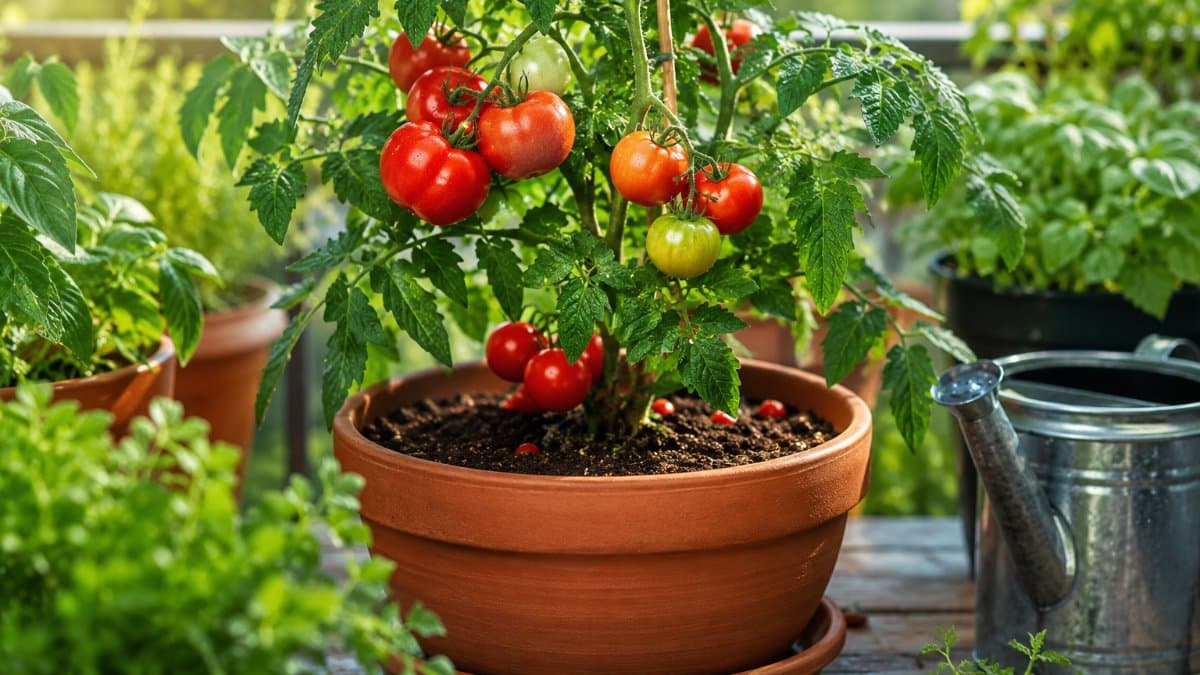
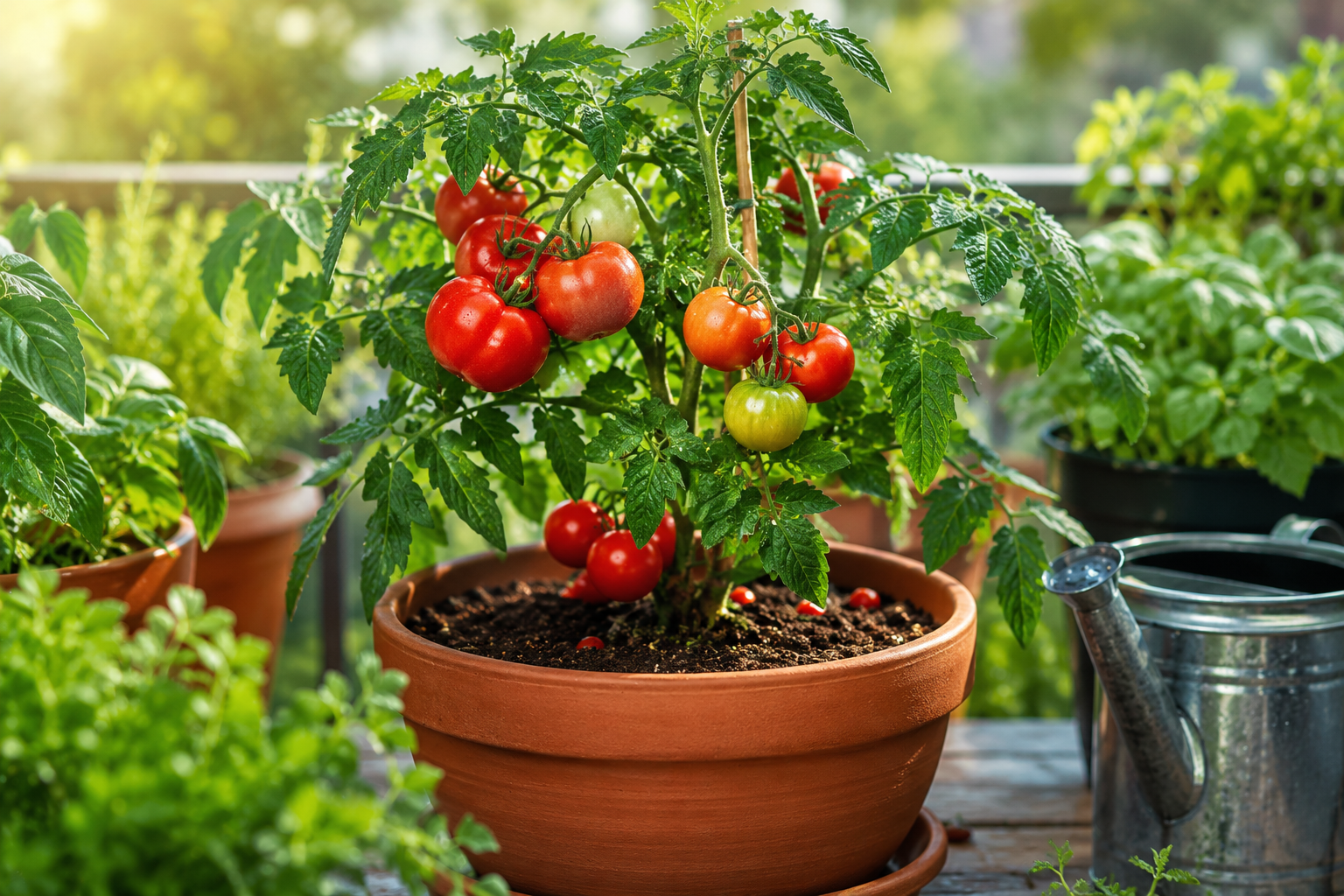
You don't need a backyard, raised beds, or even much space to pull this off. A sunny balcony, a patio corner, or a spot by a window is plenty — which is exactly why learning how to grow tomatoes in pots has become one of the most searched gardening questions out there.
Here's the short version: pick a container with real depth, use a loose potting mix instead of garden soil, give the plant consistent sun (or supplemental light), and stay on top of watering. Everything else is detail. Below, we'll walk through each step, from picking the right container to keeping the plant fed all season.
Why Growing Tomatoes in Pots Works So Well
Container growing isn't a compromise — for a lot of home gardeners, it's actually the better option. Pots warm up faster in spring, which means an earlier start to the season. They're portable, so a plant struggling in one spot can simply move to a sunnier one. And because the growing medium is contained, weeds and soil-borne diseases are far less of a problem than they are in the ground.
The tradeoff is that a container dries out faster and has a finite nutrient supply, so a bit more attention is required than an in-ground bed would need. That's a fair trade for the flexibility you get in return.
Choosing the Right Containers for Growing Tomatoes
Size matters more than style here. A shallow, narrow planter simply can't support the root system this plant develops. As a baseline:
5-gallon minimum for most standard varieties
10 gallons or more for larger, indeterminate types that keep producing all season
1–2 gallons is enough only for compact patio or dwarf varieties bred specifically for small spaces
Whatever vessel you choose, drainage holes are non-negotiable. Without them, water pools at the bottom, roots sit wet, and rot sets in fast. Material matters less than most people assume — terracotta, plastic, fabric grow bags, and even repurposed food-grade buckets all work, as long as the size and drainage are right.
Can You Grow Tomatoes in a Bucket?
Yes, and it's one of the most budget-friendly options available. A 5-gallon bucket, once you drill several drainage holes in the bottom, holds enough soil volume for a single healthy plant. Fabric or paint buckets both work fine, provided they haven't held anything toxic. This approach is especially popular for renters and anyone gardening on a porch or fire escape where a full-size planter isn't practical.
Best Varieties for Container Growing
Not every variety is suited to life in a pot. Look for labels like "determinate," "patio," "dwarf," or "bush" — these stay compact and don't need the sprawling space that indeterminate, vine-type plants demand. A few reliable picks: Patio Princess, Tiny Tim, Bush Early Girl, and Celebrity. If you already have seed on hand for a full-size indeterminate variety, it can still work in a large container — it'll just need a sturdy stake or cage to manage the growth.
Picking the Right Soil for Container Growing
Regular garden soil is one of the most common mistakes beginners make. It compacts inside a confined space, drains poorly, and often carries pests or fungal spores that cause more harm in a pot than they would spread out in a yard.
A quality potting mix solves all three problems. Look for one built around peat moss or coconut coir, combined with perlite or vermiculite for drainage and aeration. Many bagged mixes already include a starter dose of slow-release fertilizer, which is a helpful head start but won't carry the plant through an entire season on its own. Mixing in a few handfuls of compost at planting time adds organic matter and beneficial microbes that a purely synthetic mix lacks.
Planting Step by Step
Once you've settled on a container and variety, the process itself is straightforward:
Fill the container with a high-quality potting mix — not garden soil, which compacts and drains poorly in a confined space.
Bury the seedling deep, right up to the lowest set of leaves. Unlike most plants, this one grows extra roots along a buried stem, which builds a stronger root system.
Water thoroughly right after planting to settle the mix around the roots.
Place the container somewhere it'll get at least 6–8 hours of direct sun daily.
Add a stake, cage, or trellis at planting time rather than waiting — inserting support later risks damaging roots.
This same process answers a related question a lot of beginners ask: how do you grow tomato plants in pots without them toppling over or drying out within a week? The two fixes are early staking and choosing a container large enough to hold moisture between waterings.
Growing From a Tomato You Already Have
It's entirely possible to start new plants from seed scooped straight out of a ripe, store-bought fruit. Slice it open, scrape the seeds and surrounding gel into a small container of water, and let the mixture sit for two to three days. This ferments away the gel coating that naturally suppresses germination. Rinse the seeds, spread them out to dry for about a week, then plant them just like packaged seed, roughly a quarter-inch deep in moist starter mix.
One caveat: fruit from a hybrid variety won't reliably produce a plant identical to its parent. Heirloom varieties are the more predictable choice if consistent results matter to you.
Sunlight Needs and Using Grow Lights for Tomatoes
Six to eight hours of direct sun is the target, and outdoors that's usually achievable with the right placement. Indoors, or in a space with limited natural light, that number is much harder to hit — which is where using grow lights for tomatoes becomes genuinely useful rather than optional.
Full-spectrum LED grow lights, positioned 6–12 inches above the seedlings and run for 14–16 hours a day, can substitute for natural sunlight almost entirely during the early stages. As the plant matures and moves outdoors or to a brighter spot, supplemental lighting becomes less critical, but it's often the deciding factor in whether an indoor start succeeds at all.
Watering and Feeding
Containers dry out fast, especially in summer heat, so daily checks are worth the habit. Stick a finger an inch into the mix — if it's dry at that depth, it's time to water. Water deeply enough that it runs out the drainage holes, rather than giving frequent shallow sips.
Because nutrients wash out with each watering, a balanced fertilizer every two weeks (or a slow-release option mixed in at planting) keeps growth on track. Calcium deficiency, which shows up as blossom end rot, is a common container-specific problem tied to inconsistent watering rather than soil quality alone.
Common Problems to Watch For
Yellowing lower leaves — usually overwatering or a nitrogen shortfall
Blossom drop — often triggered by temperature swings or inconsistent watering
Cracked fruit — typically a sudden heavy watering after a dry stretch
Pests like aphids and hornworms — check the undersides of leaves weekly
Most of these issues trace back to watering consistency, which is the single biggest variable container growers control that in-ground gardeners don't have to think about as much.
When and How to Harvest
Color is the clearest signal, but it isn't the only one worth checking. Ripe fruit should give slightly under gentle pressure and separate from the vine with a light twist rather than a hard pull. Depending on the variety, this typically happens 60 to 85 days after transplanting a seedling outdoors.
If a stretch of cold weather or an early frost is on the way, picking fruit while it's still slightly underripe and letting it finish ripening indoors on a windowsill works better than leaving it exposed to conditions that can split the skin or halt ripening altogether. Regular picking also signals the plant to keep producing rather than slowing down once a few fruits mature.
Frequently Asked Questions
How do you grow tomato plants in pots successfully? Use a container at least 5 gallons in size, fill it with potting mix rather than garden soil, provide 6–8 hours of sun or equivalent grow-light exposure, and water consistently.
What are the best containers for growing tomatoes? Anything with strong drainage and enough volume — 5 gallons minimum, 10+ for larger varieties. Fabric grow bags, plastic pots, and buckets all work well.
Can you grow tomatoes from a tomato you bought at the store? Yes, by fermenting and drying the seeds first. Just know that fruit from hybrid varieties won't grow true to the parent plant.
Do you need grow lights to grow tomatoes indoors? Not always, but in low-light spaces, full-spectrum grow lights run 14–16 hours a day make a significant difference in seedling strength and productivity.
Final Thoughts
Growing this crop in containers comes down to a short list of fundamentals: enough room for roots, good drainage, steady sun or supplemental light, and watering you can stay consistent with. Get those right, and a pot on a sunny patio can produce just as reliably as a full garden bed — no yard required.