Flesh-Eating Screwworm Found in US Wildlife for the First Time: What You Need to Know
Amna Razzaq
October 25, 2026
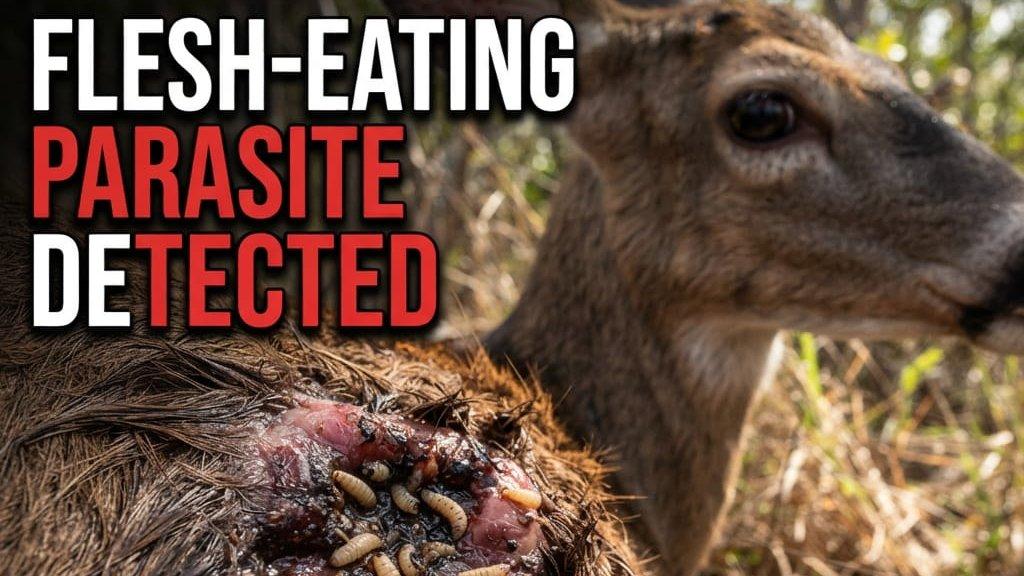
For decades, the New World screwworm was a pest Americans could mostly forget about. That changed this week. On October 21, 2026, the U.S. Department of Agriculture confirmed the parasite in wildlife in the United States for the first time since its return.
The animal was an elk. Here is what happened, why it matters, and what hunters, ranchers and pet owners should do.
What happened
USDA’s Animal and Plant Health Inspection Service (APHIS) confirmed the first detection of New World screwworm in U.S. wildlife, in an elk in Pecos County, Texas. The elk was harvested by a hunter at a Texas game ranch and reported after it was harvested.
Because the elk was already dead when it was sampled, the agency classifies the case as inactive, meaning there is no ongoing infestation in that animal. The Texas Animal Health Commission will modify a previously established infested zone, and USDA and Texas Parks and Wildlife are conducting additional wildlife surveillance in the area. global-agricultureusda
The bigger picture: how we got here
This is not the first time the screwworm has appeared in the US this year. In June, USDA confirmed a detection in a bovine in Zavala County, Texas. That first case was a three-week-old calf on June 3.
The latest numbers, as reported on October 24:
As of October 21, officials counted seven active US cases and 59 total detections since the first one. global-agriculture
Three cases were recorded in September, compared with six in the most recent week alone. global-agriculture
On the same day as the elk finding, New Mexico confirmed a case in a beef cow in Otero County. global-agriculture
A single wild screwworm fly was also detected in a trap, separate from the confirmed animal cases. global-agriculture
Officials say there is no need to panic. Dudley Hoskins, USDA’s Under Secretary for Marketing and Regulatory Programs, said the wildlife finding and the recent uptick do not amount to an outbreak, and credited the surveillance system with catching the case. He described wild fly populations as low and localized so far, based on more than 39,000 wildlife interactions tracked using trail cameras, drones, and feral hog monitoring.
What is the New World screwworm?
The New World screwworm (Cochliomyia hominivorax) is a parasitic fly whose larvae feed on live tissue, causing harm and potentially death to the host. The name comes from how the larvae feed. They burrow, or “screw,” into a wound.
The life cycle works like this:
The female fly is attracted to the scent of open wounds or body openings such as the mouth, genitalia, or umbilicus, and lays her eggs there.
She can lay several hundred eggs around a wound at a time.
The eggs develop into larvae that feed on live tissue. The larvae then fall off the host and develop into adults, which continue the cycle.
The adult fly emerges 7 to 54 days later, depending on temperature and humidity, and can mate within days.
The parasite can infest any bird or mammal species, including humans. The larvae are whitish, legless maggots with a screw-like body and a dark, pointed head.
Why wildlife detection matters
Livestock and pets are checked fairly often, but wildlife is harder to watch. A single case in a wild animal does not prove the fly is established in the wild. It does raise the possibility that wild animals could carry the pest and keep it circulating.
That also complicates trade. The screwworm threat led Washington to halt live cattle, horse, and bison imports from Mexico for more than a year, which tightened US cattle supplies and has been linked to record domestic beef prices. USDA is reopening southern border ports in phases, with the Santa Teresa port reopening to equine imports on October 26. A wildlife reservoir of the pest makes a full return to open trade harder.
The sterile fly strategy
The US eradicated this pest once before. The screwworm was eradicated from the US in 1966 through the release of sterile flies, and a smaller outbreak in the Florida Keys was eliminated in 2017.
The tool is called the sterile insect technique. Lab-reared male flies are sterilized with radiation and released in large numbers, so wild females cannot produce viable offspring.
The numbers today:
USDA says it has released more than 1.64 billion sterile flies as of October 22.
A new production facility at Moore Air Base in Edinburg, Texas, is expected to produce 100 million flies a week, targeted to open in April 2027, with a second phase adding 200 million more.
The combined network aims for roughly 500 million flies weekly once fully operational.
USDA and the EPA are field-testing a male-only sterile fly strain called NovoFly in Panama.
Not everyone is satisfied. One headline from my image search quoted the Texas agriculture chief saying the sterile fly strategy is failing, which shows the response is still debated. I could not open that article, so I haven’t relied on it for facts.
Is it a risk to people?
Human cases are rare but serious. NWS infestations in humans are rare but very painful. The CDC’s list of warning signs includes unexplained skin sores that do not heal, wounds that worsen over time, painful sores, and bleeding from open sores. Itching, burning, and a sensation of movement under the skin can also occur. New World Screwworm (NWS) +2
Some people are at higher risk. The CDC notes that people who travel to affected areas, spend time around livestock, sleep outdoors, or have an open wound are at greater risk.
On food safety, NWS is not spread through meat, poultry, or dairy products, and the US food supply remains safe. This is a parasite of living animals, not a foodborne illness.
What hunters, ranchers and pet owners should do
Hunters: Stay alert for signs of NWS when observing, harvesting, or processing wildlife. Suspected infestations in live or very recently deceased wildlife should be reported promptly.
Ranchers and pet owners: Check animals for larvae (maggots) and eggs in or around body openings such as the nose, ears, and genitalia, or the navel of newborn animals. If you suspect screwworm, contact your state animal health official or USDA area veterinarian right away.
Anyone who finds maggots: Do not throw live maggots in the trash or outside, because this could spread NWS in your area.
People with a wound that won’t heal: See a doctor, especially after travel or outdoor time near livestock. Don’t try to remove larvae yourself.