Can Water Remember Pollution? What Daphnia Tells Us About Hidden Toxicity
Swera Batool
June 21, 2026
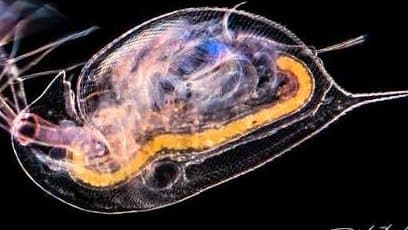
When we think of polluted water, we think of rivers of dark colored water, floating debris and foul odors. But pollution isn’t always obvious. Many freshwater bodies look clean and healthy but there are hidden contaminants quietly affecting the organisms living below the surface.
This brings up an interesting question, can water contain signs of pollution that we cannot see?
For decades, scientists have been trying to answer this question, and surprisingly some of the most valuable clues come from a tiny freshwater organism called Daphnia, commonly known as the water flea. Daphnia are just a few millimetres long but they can tell us about environmental problems long before they become visible to the human eye.
Pollution Beyond What We Can See
Freshwater ecosystems are under continuous pressure from the environment. Agricultural activity, urban development and the use of chemicals can contaminate ponds, canals, lakes and rivers. Runoff after rains or irrigation can carry chemical residues to nearby water bodies. When these materials enter aquatic systems, they come into contact with innumerable organisms that rely on clean water for their survival.
In many cases pollution does not kill aquatic organisms directly. Instead, it creates a subtle biological stress that can go unnoticed for weeks, months, or even years. This hidden stress is often called hidden toxicity by scientists.
What Is Hidden Toxicity?
Most people when they hear the word toxicity think of death or heavy poisoning. But environmental scientists know that contaminants can cause effects well before death. An organism may survive exposure to a contaminant but show marked changes in growth, reproduction, feeding activity, or behavior.
These are called sublethal effects because they do not cause immediate death, but they can affect survival and ecological performance. Such changes may affect whole populations over time and eventually disturb the stability of the ecosystem.
Why Scientists Turn to Daphnia
Daphnia is currently one of the most important fresh-water organisms for environmental research. It is an ideal organism for the study of aquatic pollution due to its short life cycle, rapid reproduction and sensitivity to environmental change. Daphnia reacts quickly to pollutants, so scientists can see changes in relatively short periods of time. This is why Daphnia is often referred to as a biological early warning system. Daphnia is often one of the first organisms to show measurable responses when environmental conditions begin to deteriorate.
When Movement Tells a Story
What's really interesting about environmental monitoring is that behavior can tell us about pollution before obvious damage is visible.
Daphnia spends most of its life swimming through the water column looking for food and avoiding predators. This movement is necessary for feeding, growth and survival.
But under environmental stress, normal swimming patterns may begin to change.
Some people become less active physically. Others move slowly or have irregular movement patterns. These behavioral changes might seem insignificant at first but are often indicators that the organism is experiencing physiological stress.
Such responses are of particular interest to scientists, because behaviour is often one of the first indications of environmental disturbance.
In many cases, changes in movement can be detected before there are any visible reductions in growth or reproduction.

The Cost of Hidden Stress
Although one stressed organism may not seem important, the consequences are much more significant when whole populations are involved.
If Daphnia have difficulty feeding, reproducing, or maintaining normal levels of activity, the population growth may decline. When populations are smaller, there are fewer organisms to do important ecological functions.
Population reductions may affect water quality because Daphnia manages algal growth by filtering microscopic particles from the water.
Daphnia meanwhile is an important food for fish larvae, juvenile fish and other aquatic organisms. Thus, a decrease in its abundance may impact several levels in the freshwater food web. What may start as a hidden physiological reaction may eventually lead to overt ecological effects.
Small Organisms, Big Environmental Messages
The capacity to recognise problems before they become too severe is one of the most challenging aspects of environmental conservation.
The obvious warning signs are big fish kills and heavily polluted rivers. But by the time these things occur, a great deal of ecological damage has often already been done.
Organisms such as Daphnia allow the detection of stress in the environment at an earlier stage.
Their responses help scientists identify threats of pollution, assess water quality and learn more about the impacts of contaminants on aquatic ecosystems.
These little guys are in many ways the environmental messengers and can tell us things about the environment that the bigger species can’t.

Looking Beneath the Surface
Freshwater ecosystems are not as simple as they seem. Underneath calm water surfaces is a world of microscopic life that is ever-responding to changes in environmental conditions.
Daphnia are very small animals, but they are very important ecologically. When these organisms respond to pollution , scientists learn a lot about the health of an entire ecosystem .
Next time you see a pond, canal or lake that looks clean and undisturbed, it is worth remembering that environmental stress does not always show. Sometimes the first symptoms of pollution appear in the behaviour of organisms too small to be seen.
Nature seldom cries loudly for its woes. It leaves more subtle clues for those who want to look closely. From Daphnia, scientists have learned that even the tiniest creatures can tell powerful stories about the health of our freshwater world.