Can Cats Eat Dog Food? What's Safe and What to Watch For
aiman
August 31, 2026
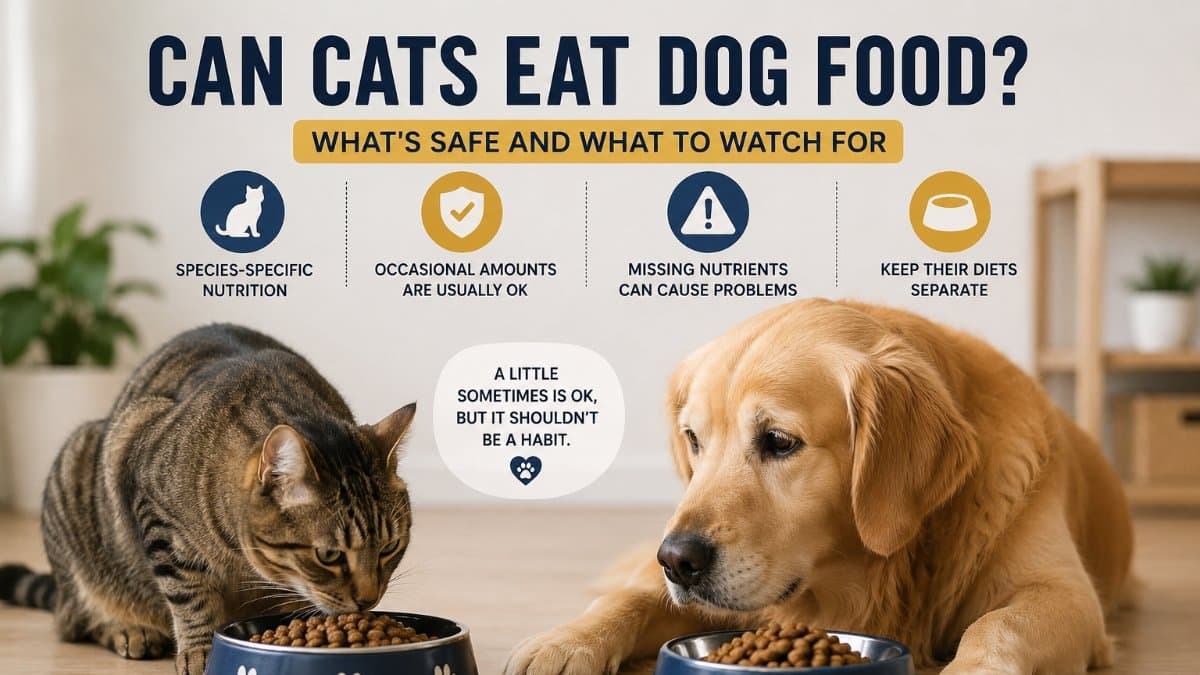
Can Cats Eat Dog Food? What's Safe and What to Watch For
If you share your home with both a cat and a dog, you've probably caught your cat sneaking a mouthful from the dog's bowl at least once. It's a common scene, and it usually raises the same question: can cats eat dog food, or is this something to worry about?
The short answer is that a small amount, eaten occasionally, generally won't hurt a healthy adult cat. But it isn't made for feline nutrition, and if it becomes a regular part of your cat's diet, it can lead to real health problems over time. Here's what's actually going on, and how to tell the difference between a harmless snack and a nutritional risk.
Why Cats and Dogs Need Different Diets
Cats are obligate carnivores. That means their bodies are built to run almost entirely on animal protein, and they can't efficiently make certain nutrients from plant sources the way dogs can. Dogs are omnivores, so their food is formulated with a different balance of protein, fat, and carbohydrates — one that suits a dog's biology but doesn't fully meet a cat's needs.
A few nutrients matter most here:
Taurine — an amino acid cats can't produce in sufficient amounts on their own. It's essential for heart and eye health, and canine formulas typically contain little to none of it, since dogs can synthesize their own.
Arachidonic acid — a fatty acid cats need from animal fat that dogs can produce internally, so it's not reliably added to what's made for dogs.
Vitamin A — cats need the pre-formed animal version; they can't convert plant-based beta-carotene the way dogs can.
Protein levels — cat food is generally much higher in protein than the canine equivalent, reflecting a cat's higher dietary protein requirement.
This is why "complete and balanced" on a bag made for dogs doesn't apply to cats. It's balanced for a dog's biology, not a cat's.
Is It Safe If a Cat Eats Dog Food Once?
If your cat eats a bite or two — wet or dry — while raiding the dog's dish, there's usually nothing to panic about. One small serving isn't going to cause a nutritional deficiency. At worst, some cats get mild digestive upset, like softer stool or a bit of gas, especially if the meal is rich or the cat isn't used to it.
The bigger difference is between a one-time incident and this becoming a habitual part of a cat's diet. A single stolen bite is a non-issue for most healthy adult cats. Regular meals meant for a dog are where the real risk starts.
Can Cats Eat Wet Dog Food?
Occasionally, yes, without major concern for an otherwise healthy cat. The wet variety is often more palatable to cats than dry kibble because of its texture and moisture content, so it's actually the more likely thing for a cat to steal. The same rule applies, though: fine as a rare bite, not appropriate as a regular meal.
Can Cats Eat Dry Dog Food?
An occasional piece is unlikely to cause harm. Some cats even prefer the crunch. Long-term, though, the dry version shares the same nutritional gaps as its wet counterpart — it's simply not formulated with a cat's protein, taurine, or vitamin needs in mind.
What Happens If a Cat Eats Dog Food Regularly
This is where the concern becomes real. If it consistently replaces or supplements a cat's normal diet, the missing nutrients start to matter.
Taurine deficiency is the most serious long-term risk. Left uncorrected, low taurine can lead to a heart condition called dilated cardiomyopathy, as well as vision problems, since taurine also supports retinal health. These issues can take months to develop and aren't always obvious early on.
Protein and fat shortfalls can leave a cat undernourished even if they're eating enough volume, since canine formulas don't deliver protein at the concentration a cat's body expects.
Digestive issues like chronic diarrhea or vomiting can show up if a cat's system is consistently working with something it isn't built to process well.
None of this happens overnight. The risk comes from repetition and duration, not a single meal.
Can Kittens Eat Dog Food?
Kittens are more vulnerable than adult cats. They're growing rapidly and have higher nutritional demands, particularly for protein, calories, and specific vitamins and minerals that support development. An occasional accidental bite isn't a crisis, but kittens should not be fed a diet meant for puppies or adult dogs as a substitute for kitten food, even temporarily, without guidance from a veterinarian.
What About Stray or Community Cats?
If you're feeding a stray cat and only have something meant for dogs on hand, it's a reasonable short-term option rather than letting the cat go hungry. It will provide calories and some nutrition in an emergency. That said, it shouldn't become the cat's ongoing diet. If you're regularly feeding a stray or community cat, it's worth picking up actual cat food when you can, since consistently feeding them the wrong species' formula carries the same long-term risks described above.
Signs Your Cat May Have Had Too Much
Watch for:
Vomiting or diarrhea that doesn't resolve within a day
Noticeable lethargy or weakness
Loss of appetite
Signs of vision changes, like bumping into things
Weight loss over time if this has become a habitual part of meals
If your cat shows any of these signs, or if a dog's diet has been a regular part of their meals for weeks or longer, it's worth having a veterinarian check them over. Bloodwork can catch nutritional deficiencies before they cause lasting damage.
How to Prevent Food-Bowl Swapping
If your cat keeps sneaking into the dog's bowl, a few practical fixes usually solve it:
Feed pets in separate rooms, or use baby gates to create separate feeding zones
Feed at the same time so neither animal is left guarding an empty bowl near the other's meal
Pick up the dog's bowl promptly after meals rather than leaving it out to graze on
Consider microchip-activated feeders if free-feeding multiple pets in the same space is unavoidable
The Bottom Line
A cat eating from the dog's bowl once in a while isn't something to lose sleep over — it's a common household moment, not a medical emergency. The real issue is this becoming a regular substitute for cat food, since it lacks the taurine, protein, and vitamin A levels a cat's body depends on. If that's happening consistently in your home, it's worth adjusting feeding setups and checking in with a vet, especially for kittens or cats who've been eating it for an extended period.
Frequently Asked Questions
Can a cat eat dog food just once without getting sick? Usually, yes. A single bite or small serving is unlikely to cause any lasting harm in a healthy adult cat, though a small number of cats may get mild, short-lived digestive upset.
Can cats eat dog food if they have no other food available? In an emergency, it's better than no food at all. It shouldn't replace a proper cat diet long-term, but it's a reasonable stopgap for a day or two.
Is wet dog food worse for cats than dry dog food? Neither is inherently "worse" — both lack the taurine and protein levels cats need. The wet version is just more likely to be eaten by cats because of its smell and texture.
Why can't cats just get taurine from a supplement instead of proper cat food? Some vets do use taurine supplements to treat a diagnosed deficiency, but this should be done under veterinary guidance, not as a way to justify feeding a dog's diet as a regular substitute. Supplementing one nutrient doesn't correct the other gaps, like protein and vitamin A levels.
How long can a cat eat dog food before it becomes a problem? There's no exact timeline — it depends on the cat's age, health, and how often this happens in place of their normal diet. As a general rule, if it's become a regular (not occasional) part of meals for more than a couple of weeks, it's worth checking in with a vet.