Can Artificial Intelligence Save Wildlife? How AI Is Changing Conservation
Swera Batool
October 29, 2026
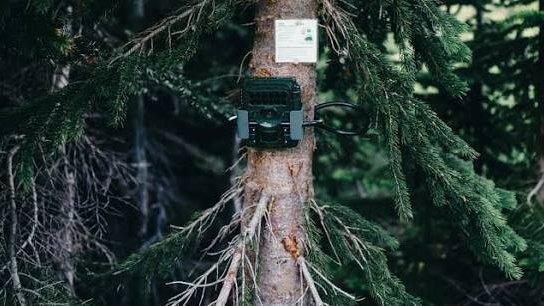
Imagine a hidden camera in the forest that can identify a passing leopard without disturbing it, or a recording device that can help researchers distinguish bird calls from thousands of hours of natural sounds. Here are some examples of how technology is opening up new possibilities for wildlife research.
Artificial intelligence (AI) is an increasingly interesting tool in conservation science. Artificial intelligence can help researchers sort through large amounts of information, which could make it easier to track wildlife, spot environmental changes and understand ecosystems. But can technology really help us protect nature and what challenges does it bring?
How AI Is Helping Scientists Observe Wildlife
Typically, monitoring wildlife is a time-consuming, labour-intensive process. Researchers may watch animals for hours, study pictures, tape animal sounds, or gather information about habitats. In remote locations collecting this information can be costly, time consuming and difficult. Artificial intelligence can help by analysing images, sounds and other environmental data.
For example, motion-sensing cameras can take thousands of pictures of animals moving through a habitat. Manually going through each image can be time-consuming. Image-recognition systems can help sort these photos and identify potential animal species, enabling investigators to focus on verifying important observations.
Another opportunity is acoustic monitoring. Recording devices can record wildlife vocalisations like frog sounds, bird calls. AI tools can analyse these recordings and detect trends that would be difficult to spot otherwise. These technologies are not a substitute for trained researchers. Rather, they can help fund the science needed to understand wildlife populations and their habitats.

Protecting Endangered Species Through Better Monitoring
Accurate information is important for endangered animals. Conservationists need to know where species are, how they use their habitats, and whether their populations are changing. AI-assisted monitoring can help researchers sort through camera-trap images, identify individual animals when their markings allow it, and organise observations collected over long periods. Such information could aid conservation planning by helping scientists to pinpoint areas that require closer scrutiny. But simply being able to identify an animal in a photograph doesn’t tell you anything about the size of its total population. Researchers must take into account the sampling methods, detection probabilities, animal movements and other ecological factors before drawing conclusions.
Listening to Ecosystems: The Power of Sound
Forests, wetlands, and grasslands have complex soundscapes. Birds singing, frogs croaking, insects making sounds and the vocalizations of many animals are all forms of communication.
Useful information on wildlife activity can be provided to researchers by these sounds.
AI-assisted acoustic analysis could be used to sort recordings and to identify sounds belonging to certain species. Repeated recordings can also be used by researchers to track changes in animal activity over time.
To study changes in the activity of calling frogs and birds, scientists monitoring a wetland could compare recordings made in different seasons. Sound recordings, however, have their limitations. Some species are difficult to detect acoustically, background noise may interfere with identification, and similar calls may be confused. The absence of a species in a recording is not a guaranty that it is absent from the habitat.
Thus, the combination of acoustic monitoring and field observations allows for a more robust assessment of local biodiversity.
Can AI Help Detect Environmental Problems?
Wildlife conservation is more than just counting animals. Researchers also need to understand the environmental factors that influence their survival. AI-assisted analysis of satellite imagery and other remote sensing data can help detect changes in vegetation, habitat fragmentation and potential land use disturbances.
These observations could help conservation teams identify areas that need further investigation. Changes to vegetation cover, for example, may lead researchers to ask whether a habitat has been impacted by development, fire or other disturbances.
But an unusual pattern in satellite imagery doesn’t always reveal its cause. Field investigations and other evidence are often needed to determine what has happened and how wildlife may be affected. The greatest value of these tools is to help researchers see patterns, and to point their attention toward questions that need answering.

The Challenges Behind Smart Conservation
AI presents significant obstacles in addition to exciting opportunities. Precision is crucial. When analyzing photos and videos from new settings, an AI system could misidentify species, ignore animals, or perform poorly. If incorrect results are accepted without further investigation, they may result in false conclusions.
There are disparities in access to technology. In certain conservation contexts, it may be challenging to secure sophisticated equipment, computational resources, dependable electricity, and professional experience. Expensive technology shouldn't be the only factor in effective animal conservation.
Protection of habitats cannot be replaced by technology. Even the most sophisticated monitoring system is unable to curb illegal hunting, rehabilitate degraded wetlands, or reduce deforestation on its own. While AI can assist in identifying issues, actual conservation calls for suitable legislation, resources, community involvement, and practical action. Acknowledging these constraints is equally as crucial as examining the advantages of new technology.
What Could AI Mean for Conservation in the Future?
Smaller, more energy-efficient systems that can evaluate data on-site could be the future of artificial intelligence in conservation. Researchers may be able to monitor wildlife in areas with restricted internet connectivity with the aid of such instruments. Additionally, scientists are investigating methods to integrate satellite observations, acoustic recordings, camera traps, and other environmental data sources.
When applied appropriately, these methods could aid researchers in developing a more thorough comprehension of ecological shifts and in reacting swiftly to new conservation issues. Successful applications, however, will require trustworthy data, open procedures, independent verification, and collaboration between local people, conservation organisations, and scientists. Rather than taking the place of ecological knowledge, technology should enhance it.
Protecting Nature Still Begins With Understanding It
Smaller, more energy-efficient systems that can analyze data on-site could be the future of artificial intelligence in conservation. Researchers may be able to monitor wildlife in areas with restricted internet connectivity with the aid of such instruments. Additionally, scientists are investigating methods to integrate satellite observations, acoustic recordings, camera traps, and other environmental data sources.
When applied appropriately, these methods could aid researchers in developing a more thorough comprehension of ecological shifts and in reacting swiftly to new conservation issues.